Press
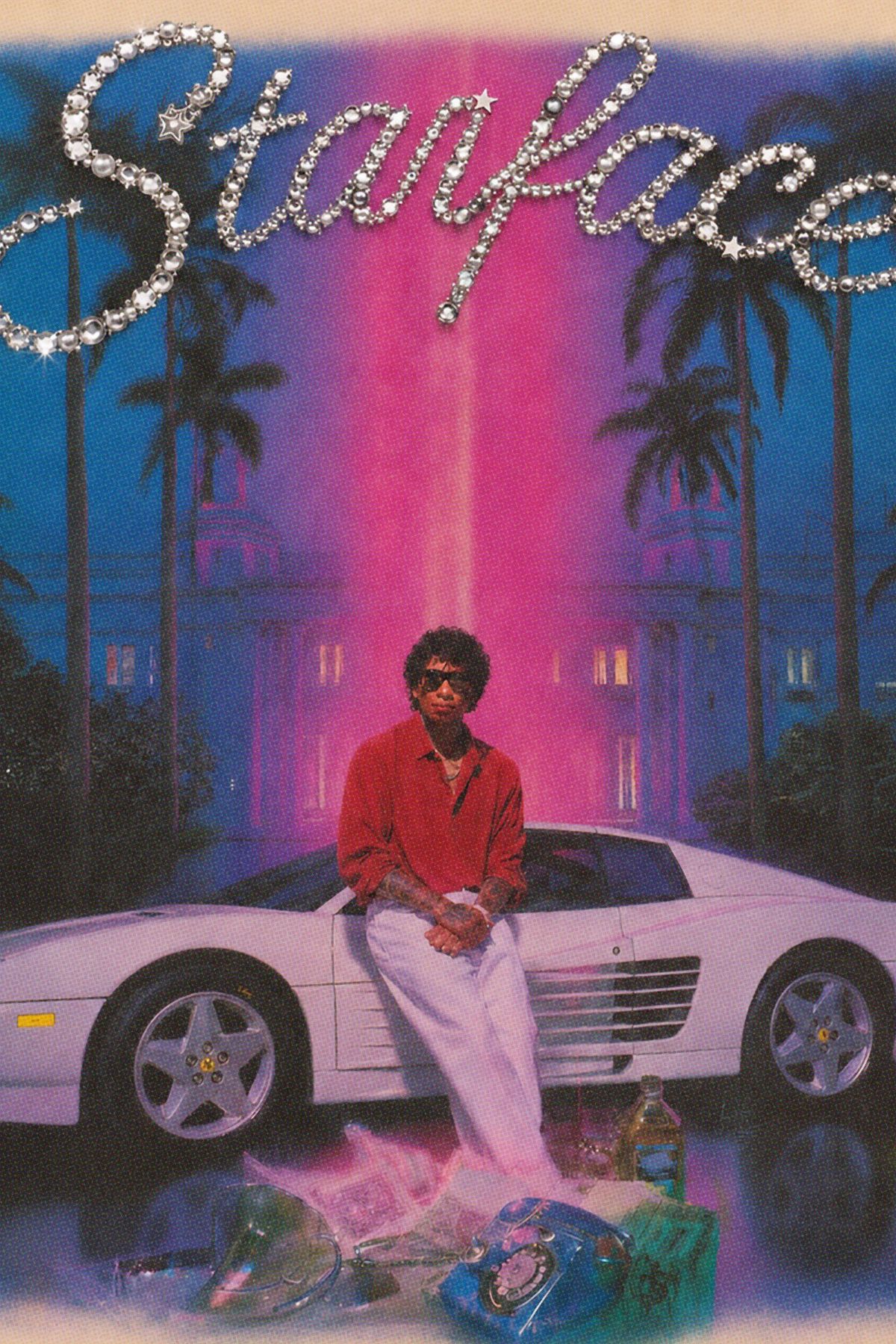
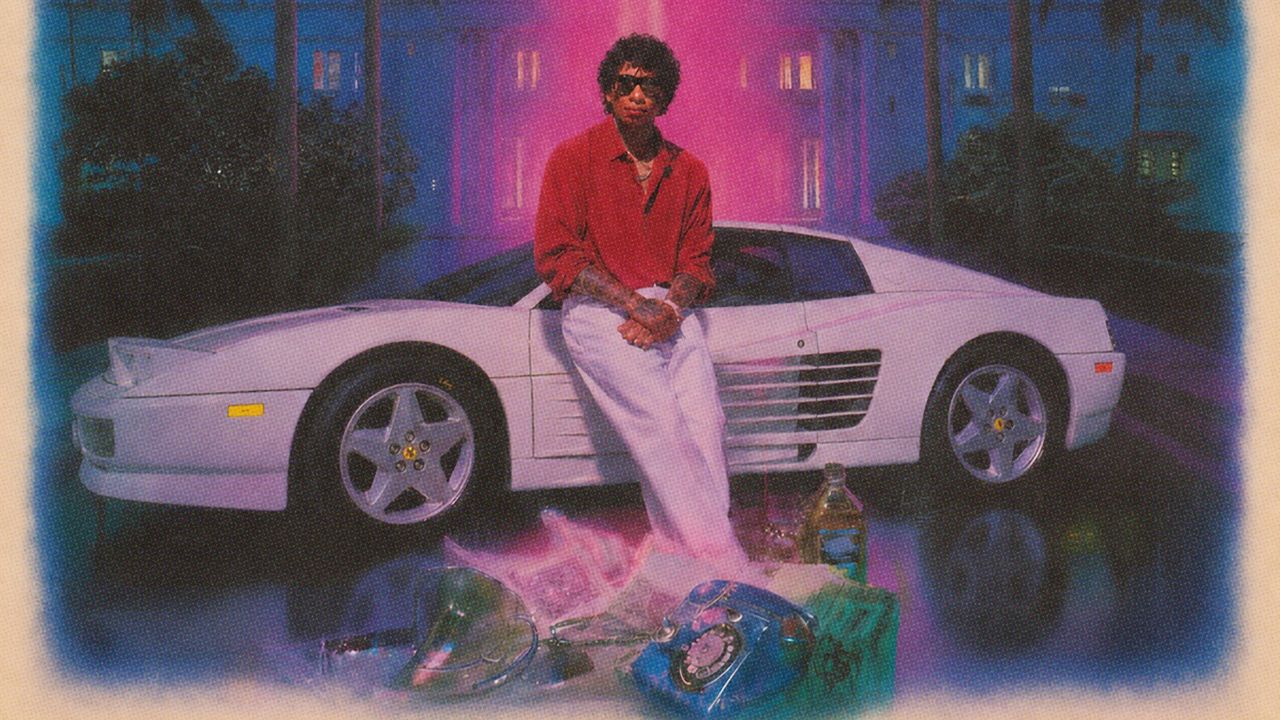
$TARFACE / Tyga: $TARFACE
Images
1 / 9
2 / 9
3 / 9
4 / 9
5 / 9
6 / 9
7 / 9
8 / 9
9 / 9
0.0

0.0

Reader Score

No score yet, be the first to add.

0.0

Genre:

Pop/R&B / Rap

Label:

Last Kings / EMPIRE

Release Date:

2026

In the late 2000s, Lil Wayne was the biggest rapper in the world. But for a guy as creative and groundbreaking as Wayne, being boxed in by antiquated notions like genre was stultifying. He wasn’t just a rapper. He was a rock star. And so, he and a battalion of producers decamped for the studio and emerged with 2010’s Rebirth, one of the most amateurish and goofy rock’n’roll albums ever created. There’s something admirable about the fact that Weezy F. Baby effectively convinced his label to let him erect a pyre of money, douse it in gas, and toss a lit match onto it, KLF-style. The record stands today as a work of accidental outsider art, something so strange and boring that it could have only been made by a genius.

Tyga is not the biggest rapper in the world. But earlier this year, he revealed himself to be a man with a dream not dissimilar to Lil Wayne’s: to completely reinvent himself and his music. The vision was to create an entirely new character separate from Tyga, the rapper known primarily for the party songs he recorded in the early 2010s while serving Young Money’s fourth banana, and a world for that character to embody for a whole-ass album cycle. This would be a concept album that dared to ask, “What if Scarface, as played by Al Pacino, was not a drug dealer but a pop star, and also Tyga?” It was probably not part of the plan for $TARFACE, the resulting slop-pop record created by Tyga under the name $TARFACE, to immediately draw derisive accusations of blatant AI usage upon the public learning of its very existence. But hey, it’s the most publicity Tyga has gotten in a decade. While I shudder to think what Rebirth would have sounded like in the age of prompt-based pop, I can all but guarantee you it would be better than this piece of shit.

No score yet, be the first to add.

0.0

If you want to get a sense of what $TARFACE actually sounds like, I suggest going to the free-to-use music AI music generator Treblo (née Sonauto), allegedly the one that Fenix Flexin used to create his hit single “Rubberz,” and typing in the following tags: “tyga, 1980s, synthpop, new wave, 80s pop, tyga, tyga, tyga, sung, thriller, synth.” (You have to type “tyga” a bunch of times to make the model realize you want Tyga’s vocals; do not, under any circumstances, try to add a “Fenix Flexin” tag to get your AI Tyga to sing because it’ll just spit out Fenix Flexin vocals.) I’m not saying the record is AI-generated; all I’m saying is that I was personally able to generate a song that sounded exactly like $TARFACE, assuming it had included a song about a critic trying to write a review of a Tyga album.

Initially, Tyga implied this album was 100% human-made. “Even down to the mixing, we used a lot of the old hardware,” he told People, citing the very specific examples of “delays, harmonizers.” “Everything that we used was stuff that they used in the ’80s.” But then a week later, when asked by VIBE if he used AI on the record, he pulled an about-face and said, “For sure.” He defended himself by claiming that the public’s negative attitude toward AI tools is similar to how people felt about early Auto-Tune use, that “there’s nothing wrong with using technology as a tool,” and besides, even if he got some musical elements from the record from AI, that “the writing, all the vocals are all me.” For good measure, he added in, “Why are people overexplaining how they make shit good?”

Fenix Flexin, too, initially claimed that “Rubberz” was all natural, before clarifying that certain AI-ish elements were used on the track, and ultimately getting exposed by a guy on Instagram Reels. So you’ll be excused for sniffing some bullshit in Tyga’s backpedaling.

There are tells littered throughout the track “POWDERED DREAMS.” For one, the thing sounds a lot like “Rubberz,” from the mid-tempo funky boops of the instrumental to the fact that it finds Tyga (or “Tyga”) singing in a faux-British accent. In the chorus, he (or “he”) sings without any signs of human breath—no inhales or exhales at all. There’s the same air of maudlin extravagance, punctuated by flashes of detail (“Bankrolls on the table,” “Ice in the glass, cash in the tray,” respectively) throughout the lyrics of both tracks. It may be a coincidence, but the lyrics also reference the shoreline, which is the kind of thing a generative music tool might spit out if you’re citing Fenix Flexin—who, just to be crystalline, is a member of Shoreline Mafia—in the prompt.

Even in its less suspect moments, there’s just something about $TARFACE that places the listener in their own personal Cronenberg film. While Tyga has claimed the album was inspired by Prince, Michael Jackson, and “even Tom Petty,” there are no discernible sonic homages or direct references—it’s all surface-level pastiche. “JUST US TONIGHT” has drums that kinda sound like C+C Music Factory. The melody line on “FREEZING” is reminiscent of something Tom Petty would have used, I guess. “GAVE U RACKS” is Cameo-ish enough. But influence is a form of personal expression, and it often elicits a feeling of connection in the listener whether the reference is identifiable or subliminal. Not so with $TARFACE, an album that confuses loving music with prompt engineering.

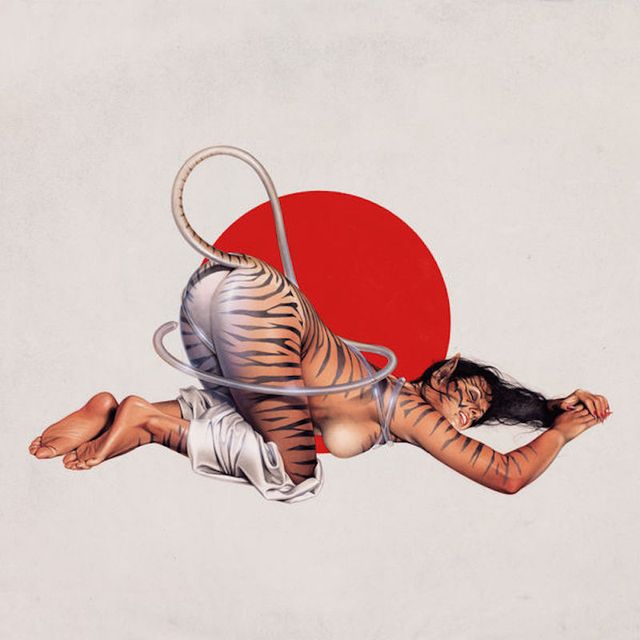
The last time Tyga tried his hand at singing for a whole album was on 2018’s Kyoto, the one with the cover that was like Smell the Glove, but racist. It was also bad. But there was no doubt that, within its generic lyrics and instrumentals that sounded like stale Weeknd and Jeremih leftovers, there was something unmistakably Tyga there. His Auto-Tuned voice warbled; he modulated his cadence in conversation with the beats, often clumsily so; he sang goofy shit like, “And when you need space/I’ll give you a spaceship.” The difference between the two records is illustrative: There’s inherent friction when you translate the musical ideas in your head to the real world, and what makes a work interesting is often derived from how an artist and their collaborators navigate that friction, both technically and creatively. Without it, things have a tendency to fall flat.

This is not to say that Tyga, or any artist, isn’t allowed to use AI when creating their music. Even if “Rubberz” is largely AI-generated, Fenix Flexin seems to be such a strange and unique guy that some of his eccentricities couldn’t help but bleed into the model’s output. Beyond that, generative composition has long been a part of the avant-garde experimental musician’s toolkit, and God knows where some of the unplaceable samples in your favorite street-rap tape come from, especially if the artist copped the instrumental from an online beat marketplace.

The sad truth is that AI is a tool the pop music industry has welcomed with open arms, largely for the same reason industries across the economy have also done so: the promise of cheap labor. Session players and writers cost money. They need to eat food and drink water; they take breaks to go outside and smoke cigarettes while checking Instagram on their phones. They might ask for credit on things; they might have managers who try to negotiate a more favorable revenue split for their contributions. AI does none of these things. And if the actual music being made is worse for it, then the pop music industry will only start to care when the products being generated by AI-created music are demonstrably worse—i.e., less profitable—than when the music was being made by actual people, and then it will continue iterating on the AI-to-human ratio until it has optimized its profits.

As a listener, it’s a bad situation. What makes music enjoyable is the artist creating some sort of stakes for themselves to bring out their best work. Sometimes it’s as simple as taking an economic risk: If Tyga had blown an Apocalypse Now-sized hole in his label budget by clearing a bunch of samples from sleazy ‘80s synth-pop and disco records—or hiring out session players, a vocal coach, and acquiring vintage equipment—he might have fucked around and made the album of his life, if only so he could make the money back and not get dropped.

Instead, $TARFACE is smug and complacent, an amalgam of ’80s synth-pop and disco slapped together by someone who’s seemingly never cared to listen to one synth-pop or disco record in his life. Given the amount of actual effort or even labor put into $TARFACE—which is to say, about zero—the margins on this thing must be amazing. Stream it out of morbid curiosity if you must, but know that even a single listen runs the risk of making it profitable and therefore encouraging the music industry to commit such atrocities again.

0.0

0.0