Press
Taylor Swift and Bad Bunny Dealt With Trump Quietly. It’s a Smart Move
Images
1 / 7
2 / 7
3 / 7
4 / 7

5 / 7
6 / 7

7 / 7
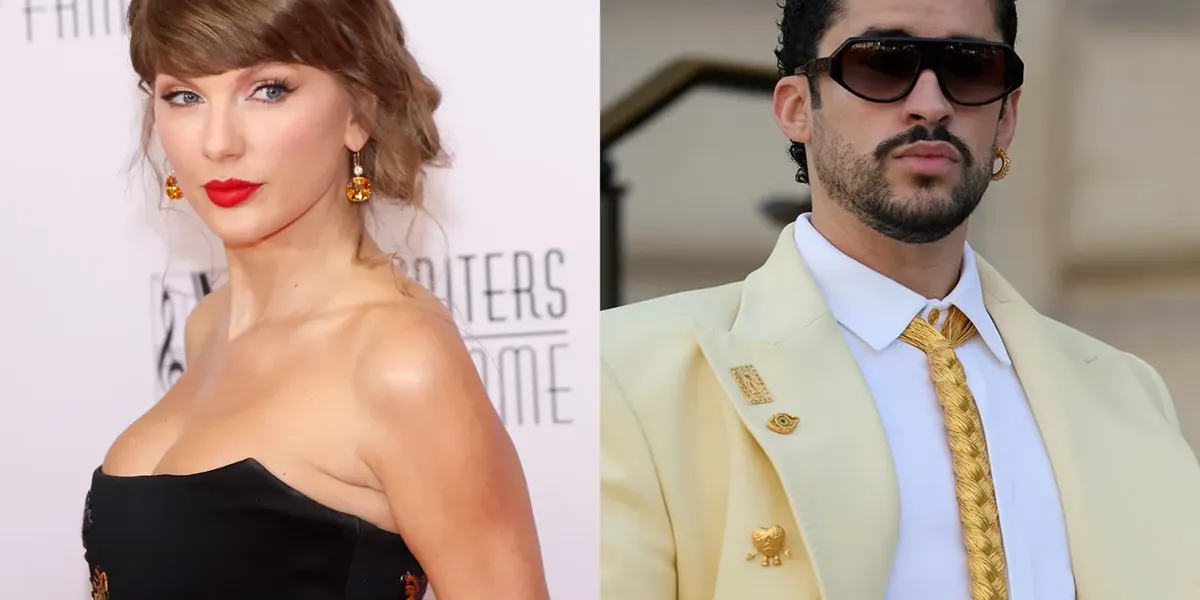
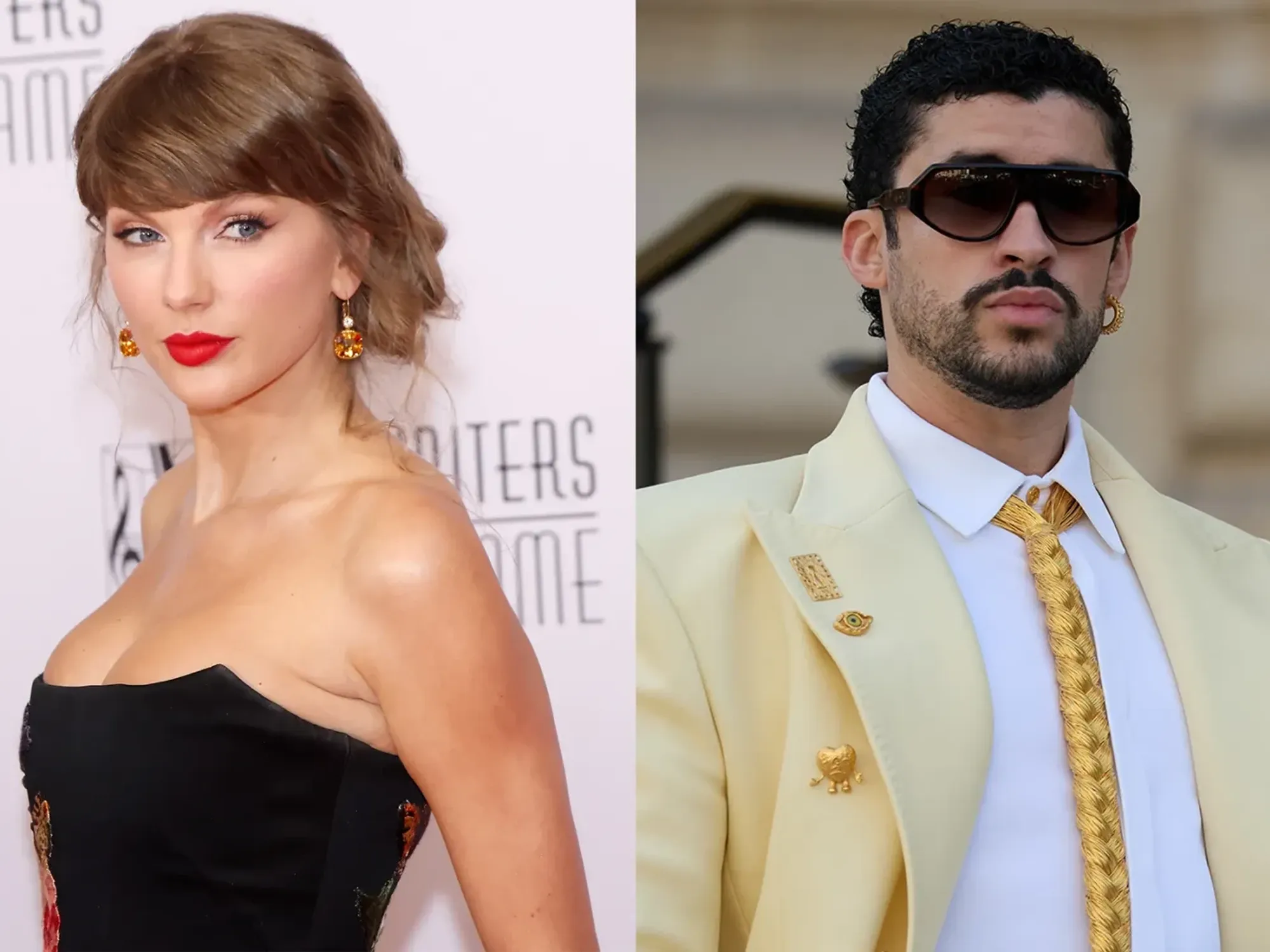
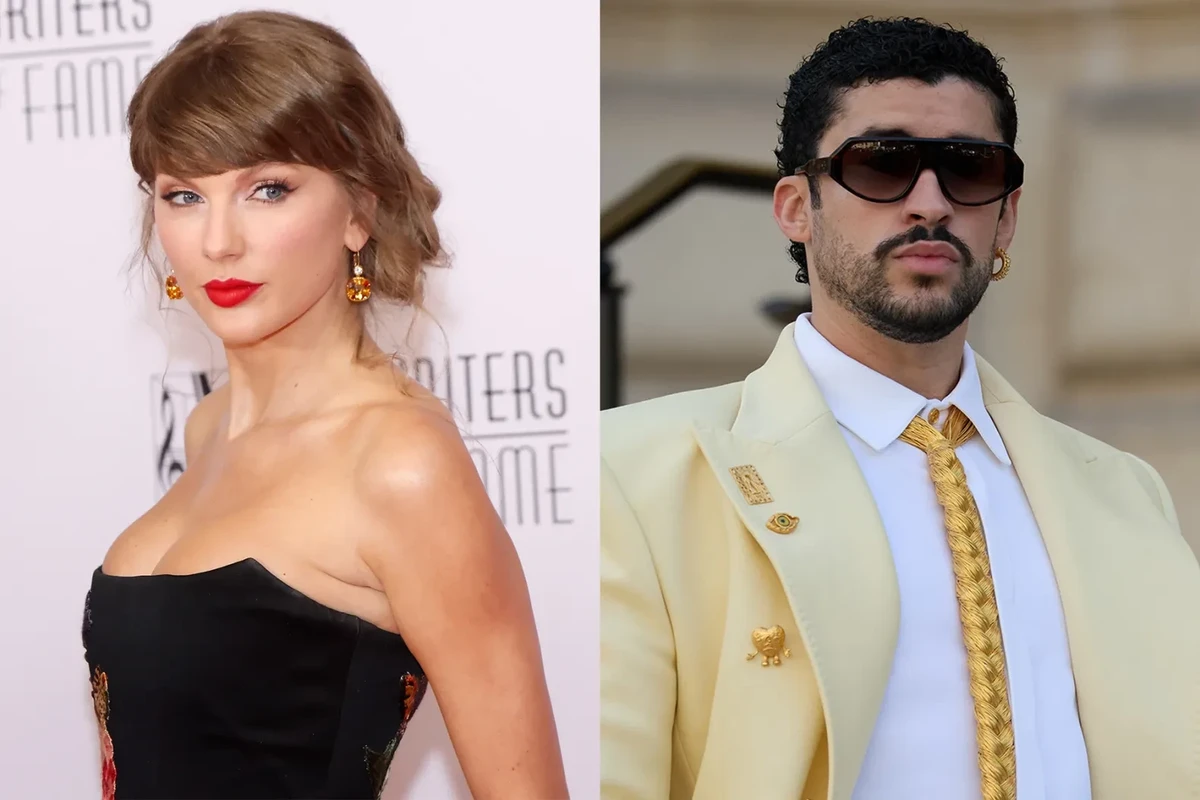
Both superstars muted their songs from videos posted by the administration without drawing more attention to the White House Taylor Swift and Bad Bunny in a split image Taylor Swift and Bad Bunny are both major superstars — and they’ve shared some parallels in their careers and discographies for several years. Now, they’re even using the same playbook to deal with taunts and baiting from Donald Trump and the White House’s social media teams. Since Trump took office during his second term, he and his administration have been using social media as part of their communication strategy. The propaganda-like, rage-bait-style clips often lean into internet culture and use popular music to make light of Trump’s most egregious actions, like his immigration policy and war-hungry foreign policy. Olivia Rodrigo, Katy Perry, Ariana Grande, and Noah Kahan are just some of the artists who have had their music used in these videos without their permission — and vehemently spoken out against these actions and against the president. In the past couple of weeks, the Trump administration seems to have wanted to provoke a response from two of the world’s biggest superstars: Bad Bunny and Swift. On July 30, the official White House TikTok used “La Mudanza†for a particularly tone-deaf video about immigration that celebrated the number of deportations under Trump. A week later, a video with text that said, “mood because it’s August and Donald Trump is your president†set to Swift’s “August†was uploaded by Team Trump, the president’s official campaign account. The caption was an overt provocation: “I’m sure Taylor Swift is going to be super excited we used her song,†it read. Days later, another clip from the same account featured an edited version of Swift’s Red album cover with text that said, “Did you know that Taylor Swift wrote a whole album about the color of the Republican Party?†Neither musician has released a public statement denouncing the use of their music in Trump’s videos. Instead, two of the world’s biggest superstars quietly removed their songs from videos posted by official accounts linked to the Trump administration. (It’s unclear if there is a TikTok feature that allows selective sound muting on videos or if the respective teams reached out to the social media accounts directly.) The tracks are still available for other TikTok accounts to use in their videos, making their silence a pointed — and smart — approach. Both Bad Bunny and Swift seem to recognize the president and his administration’s tactics for what they are: antagonizing moves that keep the Trump conversation centered on his social media presence, rather than his actual policies and the harm they commit. Why would they add their star power to the conversation and stoke the flames when that’s exactly what the White House appears to want? Some people argue that celebrities should wield their platform to denounce Trump at any chance if they are truly not politically aligned with his MAGA politics. But because they hold so much influence, these superstars need to be strategic about how they use it. Benito, in particular, has been incredibly outspoken about his politics. He stood on two of the world’s biggest stages and used them to voice pro-immigration messages, denounce Trump’s policies, and highlight Puerto Rico as it struggles with the effects of U.S. imperialism. “Before I say, ‘Thank God,’ I’m going to say, ‘ICE out,’†the Puerto Rican superstar said at the 2026 Grammys. “We’re not savage. We’re not animals. We’re not aliens. We are humans and we are Americans.†Last summer, Bad Bunny’s music video for “Nuevayol†used a voice that sounds a lot like the president’s to deliver a pro-immigrant message. “I made a mistake. I want to apologize to the immigrants in America. I mean the United States. I know America is the whole continent,†the voice bellows out of a Seventies radio toward the end of the video. “I want to say that this country is nothing without the immigrants.†Fans were convinced that Benito would speak out against the official White House TikTok account when it used one of his most political songs. But commenting on the video would only blow up the discussion for a wider audience. When Rodrigo, Perry, Grande, and Kahan made public comments, spokespeople for the White House used the opportunity to spread hateful rhetoric. “We’ll say this one last time: what’s actually barbaric, inhumane, and heinous are the criminal illegal aliens who have injured and murdered innocent American citizens,†Abigail Jackson said in a statement to Rolling Stone after Grande spoke out. It’s the antithesis of what Benito said during his Grammys speech this year: “The only thing more powerful than hate is love.†Swift, on the other hand, has dealt with Trump and the right-wing’s instigations for years, each one crazier than the last. The TikTok videos from the last week aren’t even the first time that the administration has used the singer’s music for social media videos. Last fall, both the official White House TikTok account and Team Trump used songs from Swift’s then-newly released The Life of a Showgirl in separate videos. One plucked the lyrics “pledge allegiance to your hands, your team, your vibes†from “The Fate of Ophelia†to celebrate Trump, Vice President JD Vance, and the first and second ladies. The others boasted about Trump by using “Father Figure†and honored Melania Trump’s Patriot of the Year award with “Opalite.†As of Aug. 10, the audio is not available under all of these specific videos. The pop superstar has not spoken publicly about these instances. But she has made her disdain for Trump clear. Over the years, Swift has criticized Trump’s autocratic leadership. On X, she wrote “we will vote you out†and endorsed Joe Biden and Kamala Harris in the 2020 and 2024 elections, respectively. In 2019, Swift told Rolling Stone, “There’s literally nothing worse than white supremacy. It’s repulsive. There should be no place for it.†Even though she’s shared her liberal viewpoints on issues like abortion, LGBTQ+ rights, and racial inequality, Swift has still faced ridiculous claims of being MAGA-aligned and folding in right-wing dog whistles to her music — and that’s without ever naming Trump. If Swift were to make a statement about her music being used by the Trump administration, the attention-seeking president would absolutely revel in it. Getting Swift and Bad Bunny to weigh in is exactly the type of headline grabber he would love to draw attention from his remarkably unpopular presidency. The Ramones in Santa Monica in 1976 (from left): Johnny Ramone, Tommy Ramone, Joey Ramone, Dee Dee Ramone By the time the Ramones traveled to Los Angeles in August 1976 to play their very first West Coast concerts, they’d already established themselves as the vanguard act of the thriving New York City punk scene, signed a deal with Sire Records, released their groundbreaking debut album, gigged up and down the East Coast, and even played a couple of landmark gigs in London a month earlier that had a seismic impact on the burgeoning underground rock scene that had recently birthed the Clash, the Sex Pistols, the Damned, and many others. But punk hadn’t quite made its way out to California at this point, even though the Runaways had formed, and the press was still quite skeptical of the Ramones and the entire movement they represented. “The album cover photo [of their debut] — which looks as if taken from a post office wanted poster — shows four young toughs wearing black leather jackets and old, wrinkled jeans,†wrote the noted Los Angeles Times critic Robert Hilburn on Aug. 1, 1976, just 10 days before the Ramones made their L.A. debut at the Roxy. “Two of the guys are wearing dark glasses and smirking in the slightly perverse way that would make even the sadistic gang from A Clockwork Orange consider crossing the street to avoid a confrontation.†Hilburn continued by pointing out that their songs contain references to street hustlers, drug use, and even Nazism. “The Ramones would have faced much resistance in 1956,†he wrote. “The question facing us now is whether the group is acceptable even in 1976. If not, the reasons for rejection will be vastly different. Whereas the Ramones may have been too much of a threat to parents in the 1950s, the group may be too much of a joke now.†He ultimately concluded they lack the “imagination†of Patti Smith, the “art†of Bruce Springsteen, the “musical affection†of Dr. Feelgood, and the “fury and growl†of Aerosmith. “As long as the group sticks so religiously to the punk-rock mold, the Ramones music (and image) is easy to like, but difficult to believe,†he writes. “And authenticity has always been a crucial fact in rock.†In some ways, Hilburn was correct. Patti Smith, Bruce Springsteen, and Aerosmith all had much brighter futures in the world of popular music. (Dr. Feelgood are largely a tiny footnote in America.) But he was wrong, and he’d probably be the first to admit it today, when he said that the Ramones lacked authenticity. They may have given themselves fake names, but Joey, Johnny, Dee Dee, and Tommy Ramone all had a deep and genuine love for the stripped-down music they were making, and real disdain for the mainstream rock of the day. (Frampton Comes Alive! topped the Billboard 200 when the Ramones touched down in L.A., “Don’t Go Breaking My Heart†by Elton John and Kiki Dee was on top of the Hot 100, and Yes were headlining stadiums.) The Ramones played back-to-back shows at the Roxy on Aug. 11 and 12, 1976. The Los Angeles Times listed those dates in tiny print on their calendar page near upcoming public lectures like “Practical Applications of Self-Hypnosis,†“Who Killed John Kennedy,†and “How Relationships and Sexual Enhancement Really Happen.†On the club scene, there was Grateful Dead lyricist Robert Hunter at Golden Bear, jazz pianist Mose Allison at Lighthouse, and jazz trumpeter Freddie Hubbard at Starwood. The were all dwarfed that month by major events like Jethro Tull and Robin Trower at the L.A. Coliseum; Kiss with Ted Nugent, Montrose, and Bob Seger at Anaheim Stadium; and Aerosmith with Lynyrd Skynyrd, Jeff Beck, Rick Derringer, and Starz, also at Anaheim Stadium. The Roxy seats about one percent as many people as the Angels’ ballpark. But it sounded pretty full when the Ramones took the stage for the Aug. 12 show and Joey Ramone blared out, “Good evening, we’re the Ramones, and if you’re a loudmouth, baby, you better shut up.†(Unlike night one, this show survives on tape.) Over the next 33 minutes, they played 13 of the 14 songs from their debut at breakneck speed, leaving out only “I Don’t Wanna Go Down to the Basement,†along with “I Remember You†and “Glad to See You Go,†from their upcoming album Leave Home. “The New York street rockers’ extreme primitivism, posited as a love-’em-or-hate-’em proposition, is marked by a pure, authentic inanity and a genuine inescapable energy that burrows beneath the foundations of current rock’s pretensions and contrivances,†reads a review in The Los Angeles Times by Richard Cromelin. “Its deadpan, wimpy delivery is endearing, and its repetition is allayed by its incredible rapid-fire pace. Each number begins with an obsessive ‘one-two-three-fah!’ (once they got all the way up to seven), some songs, contrary to detractors’ accusations, have as many as five chords, and while there’s a bit of variation in tempo and structure, it’s not enough to mollify the relentless assault.†Cromelin’s focus on the “pure, authentic inanity†of the Ramones seems like a direct response to Hilburn’s assertion earlier in the month that the Ramones were inauthentic. But Cromelin had the benefit of experiencing the Ramones live in the flesh at the Roxy. Hilburn was going only on the album, and the relentless hype coming out of New York, which was easy to dismiss because the New York Dolls, the most direct antecedent to the Ramones, had flamed out after just two records. But Hilburn and other doubters would have plenty more chances to change their minds in the two decades that followed. The Roxy was the first of 180 shows the Ramones would play in California before splitting up in 1996. They filmed concert scenes for their 1979 movie Rock and Roll High School back at the Roxy, hit just about every club on the Sunset Strip several times over, performed the Greek Theater on a stacked bill in 1990 that included Debbie Harry, the Tom Tom Club, and Jerry Harrison, and even played the 2,263rd and final show of their career at L.A.’s Palace Theater on Aug. 6, 1996. It was a marathon set that included guest appearances by Eddie Vedder, Lemmy Kilmister, Chris Cornell, and Dee Dee Ramone, who had left the band seven years earlier. It seemed odd that maybe the most quintessential New York band in rock history, rivaled only by the Velvet Underground, would wrap up their career in Los Angeles. But it was their second home by that point. Johnny Ramone moved there right after the Ramones broke up. Dee Dee Ramone died there in 2002, and is buried at Hollywood Forever Cemetery, not far from a monument to Johnny that draws fans from all over the world. (Joey is buried back east in New Jersey, and Tommy’s final resting place is on Long Island.) To commemorate the 50-year anniversary of the first Ramones record, a one-time-only supergroup featuring Green Day’s Billie Joe Armstrong, blink-182’s Travis Barker, Rancid’s Tim Armstrong, and C.J. Ramone (Dee Dee’s replacement) are playing a concert on Aug. 30 of this year. With every member of the original lineup now dead, it’s about as close to an actual Ramones concert as we’re going to get these days. But it’s not taking place at the former CBGB site, which is now a John Varvatos store that holds occasional concerts, or anywhere else in New York City. They’re staging it at Hollywood Forever Cemetery, just four miles from the Roxy, where the entire saga of the Ramones in L.A. began. Travis Barker Travis Barker‘s near-death experience in a plane crash in 2008 is at the center of the trailer for upcoming documentary, Travis Barker: Louder Than Fear. Co-directed by Justin Krook and Michael Dwyer, the film reflects on the Blink-182 drummer’s life and career, including how he battled “pain, grief and the thin line between survival and surrender.†Louder Than Fear debuted at the Tribeca Festival in New York earlier this year and will arrive on Hulu and Disney+ on Aug. 13. It features appearances from late Foo Fighters drummer Taylor Hawkins, Barker’s bandmates Mark Hoppus and Tom DeLonge, and Barker’s wife, Kourtney Kardashian. In the clip, Barker recalls becoming hooked on painkillers due to the non-stop touring schedule. “I was taking so many pills that I had a security guard whose only job was to watch me sleep and make sure I was breathing,†he says. Barker’s assistant Chris ‘Lil Chris’ Baker and bodyguard Charles “Che†Still were killed in the plane crash, along with the pilot and co-pilot. Barker and Adam “DJ AM†Goldstein survived, however Goldstein died a year later from an accidental drug overdose. “Che and Chris were like brothers to me,†Barker says in the trailer. “And then AM passing away a year later… why am I here, when everyone else isn’t? I had to ask myself who I was gonna be after this accident.†On Monday, Barker appeared on the podcast On Purpose With Jay Shetty to discuss the documentary. He told host Jay Shetty that he knew something wasn’t right on the day of the crash. “All the signs were there,†he said. “Where now, older me would just say, ‘I’m not going to get on the plane.'†He said that his daughter, Alabama Barker, also seemed to have a premonition. “When I leave and I say bye to Bama, she also calls it,†he recalled. “She’s young at the time, she’s three or four years old, she’s bawling. She doesn’t usually do that. She’s like, ‘The roof is gonna come off! The roof’s gonna come off!’ I’m like, ‘What’s she talking about?’†Across Canada, country music is synonymous with gatherings. It lives in the dust of a summer rodeo, the sticky floor of a neighborhood dive bar and the reverberating rafters of an arena filled with thousands of voices singing back every word. While most of the music industry spent the last decade adapting to a digital-first reality, country music continues to derive its power from physical spaces. In an age of algorithmically generated playlists, the true currency of the genre remains the shared experience. In an age of algorithmically generated playlists, the true currency of the genre remains the shared experience. That communal spirit is a major reason why country has become one of the fastest growing cultural movements in the country. Through initiatives like Bud Light’s ongoing support of live country music, the connection between artists and audiences continues to be strengthened beyond the stream and into the venues, festivals and tours where fandom is built. A new wave of homegrown talent, led by artists like Josh Ross, Owen Riegling, and James Barker Band, has reshaped the sound by weaving contemporary influences into traditional songwriting. In doing so, they have broadened the appeal of the genre, drawing in listeners who might never have called themselves country fans ten years ago. Yet, while the audience has expanded, the journey to get here has grown far more complex. The traditional blueprint for launching a country career was simple enough. Write good songs, get on the radio, hit the highway and hope people showed up. Today, those fundamentals still matter, but they are stacked on top of a relentless new set of demands. Modern artists are expected to go viral on social media, drive millions of global streams and maintain an exhaustive touring schedule, often all at once. For Canadian artists trying to break through at home while competing on a global stage, talent alone is not enough. They need a functional, resilient ecosystem behind them. That support system has never relied on a single player. It takes labels to nurture raw talent, managers to plot long term strategy, promoters to take financial risks and festivals to introduce acts to new crowds. But as the cost of touring rises and the market becomes more crowded, a new dynamic has entered the frame: strategic brand partnerships. Historically, brand involvement in live music meant little more than a logo slapped onto a festival mainstage poster. Today, that dynamic is shifting toward meaningful infrastructure. Brands are increasingly recognizing that supporting music means supporting the tour bus, the venue and the stage itself, which are the places where long-term careers are actually built. The ongoing partnership between Universal Music Canada and Bud Light Canada, for example, illustrates how this plays out on the ground. Now in its third year, their collaborative platform, the Bud Light Buckle Up Tour, was designed specifically to put rising Canadian country-music talent in front of live audiences across the country. Instead of funding a single, one-off event, the initiative has provided sustained touring support year after year, backing Owen Riegling in its inaugural run, following up with James Barker Band and most recently Josh Ross. As part of the broader Bud Light Presents Later Tonight Tour for Ross, the Buckle Up Tour stops in cities like Toronto, Banff, Medicine Hat and Calgary do more than just sell tickets. They create intimate, high-impact touchpoints that bring artists and fans face-to-face in markets that are critical to building a lasting domestic fanbase. The timing could not be better. While a hit single might capture millions of casual streams overnight, streaming data alone rarely sustains a career across multiple decades. In country music, real loyalty is not measured in monthly active listeners. It is measured in miles traveled, stages played and audiences won over night after night. Touring is where casual listeners turn into diehard fans who buy tickets, wear the shirts, and pass the records down to their friends and kids. As the Canadian country scene continues its rapid expansion, keeping that live infrastructure strong is essential. Sustained investment from industry partners, brands and fans ensures that home grown artists build the kind of foundation required to sustain a lifelong career. For a genre built on storytelling, that face-to-face connection remains its absolute greatest asset. Chart positions will come and go, but long after a song leaves the top forty, the memories that stick are the ones made in the crowd. As Canadian country music enters its next major era, its future will not just be streamed. It will be lived on the road. "Just keep moving," says Morgan Freeman, who sees no retirement in sight at age 89. Morgan Freeman has spent the last five decades playing Batman’s Bat-Tech supplier, the president of the United States (multiple times), Nelson Mandela, and God himself, but since 2001, he’s also been the proprietor of his very own juke joint. He co-founded Ground Zero Blues Club in Clarksdale, Mississippi — a state where he spent part of his childhood — after realizing that visitors to the site of Robert Johnson‘s crossroads had no place to hear the blues. The latest offshoot of that venture is the just-released album Morgan Freeman’s Symphonic Blues Experience, which does just what the title promises, adding tasteful orchestral arrangements by London’s Chineke! Orchestra to new takes on blues standards. Taj Mahal covers Son House’s “Death Letter Blues,†Keb’ Mo’ revs up Albert King’s “Cadillac Assembly Line,†and Shemekia Copeland reclaims Johnson’s “Traveling Riverside Blues,†nodding to Led Zeppelin’s reinvention of it along the way. The album, which also includes historical narration by Freeman, benefits the Ground Zero Arts Foundation, the club’s charitable arm. It grew out of a touring live show of the same name featuring local orchestras alongside Ground Zero regulars, with Freeman’s filmed narration. The 89-year-old Freeman (resplendent at home in a dashiki) and Ground Zero co-owner and CEO Eric Meier joined Rolling Stone on a Zoom call to talk about Freeman’s own musical history, why he’s jealous of Denzel Washington, his thoughts on retirement, and more. Morgan, you heard the blues on a porch in Mississippi as a very young child. What do you remember about it?Morgan Freeman: I remember moonshine in a Mason jar. I remember fried fish. I remember going with my grandmother to a pond or a creek somewhere and fishing with a cane pole. Those are snatches, just like this guy with gold teeth on my grandmother’s porch. He’s drinking moonshine out of a Mason jar and he’s got a guitar and he’s, yeah, music-ing. I was three or four years old. Were you drawn to it at that point, or was it just part of the atmosphere?Freeman: No, not particularly. It was just music. By the time I was five it was Glenn Miller. And “Tuxedo Junction,†“Five O’Clock in the Afternoon.†And a little bit of Count Basie. Not drawn to it, it’s just that was the music in the air. People would have their Philco radios turned up. You’re not old enough to remember that. And you moved to Chicago in the 1940s, and you missed the Chicago blues — that wasn’t part of your experience growing up.Freeman: Not at all. Yeah. South side of Chicago was a jungle. You had to thread your way through that carefully. Yeah, growing up, hoodlum-ism was one of the easier choices to make.Did you ever have any interest in becoming a musician yourself?Freeman: In high school, I was in music. I sang with the glee club — tenor, then bass because the bass guys couldn’t handle it. And in the band I blew the alto saxophone. But at 16, I suffered pneumonia and pleurisy. Got an abscess on my lung for that, for my pleurisy. And the doctor said, “No more horn. You won’t be able to do it. You won’t be able to get into the Air Force either.†I got into the Air Force and I didn’t have a mark on my lung.So you could’ve kept playing the horn, maybe.Freeman: I could’ve.I heard that Shawshank Redemption director Frank Darabont wanted you to play a harmonica at the end of that movie — the one that Tim Robbins’ character gave you — and you turned that down, so we didn’t get a chance to see that either.Freeman: Yeah, to me, that was a “Yes, boss man†moment. It didn’t make sense to me. That was one of the greatest endings of all time, so whatever decisions you made clearly worked out.Freeman: Yeah. I loved it. I like the whole movie, actually.When did your actual interest in the blues begin, and how did it develop?Freeman: We were in Mississippi working and we saw a couple of young people, and they said, “Where can we hear some blues?†That was it. There was no answer. We didn’t know. There was no place.So you made it.Freeman: We bought the building. Turned it into a juke joint. That was Ground Zero. Meier: With this project, there’s a hip-hop band I’d seen perform in Australia called the Hilltop Hoods. They’re these two high school buddies that have a really fun hip-hop thing, and they had done some symphony crossover. I talked to them and said, “OK, I like this kind of idea. Let’s try this for the blues.â€â€¦ Normally, you do an album and then you go tour. We did the reverse here. We realized we had something and with the response we’ve received, we thought we want to memorialize it with a project like this. Morgan, how much have you gotten into going back and listening to the blues, in your spare time, for pleasure?Freeman: It’s not specifically the blues. I’m a great fan of Frank Sinatra’s music and Al Green. Otherwise I’m not a blues specialist or aficionado. This is a necessity. This is something where we found what is needed, and we did it. It’s not my passion for music that did it. There’s an artist named Kingfish, who’s a young Black man who plays the blues. He told me he had white fans surprised that he was singing the blues, because there’s been this divorce of this music from its roots in a way that is unfortunate. In this project there’s some reconnection there and a reminder of the real history.Meier: Kingfish is a hometown person. He’s from Clarksdale. We can count on him for New Year’s every year. He’s usually onstage with Morgan, [co-owner Howard Stovall], myself, and others, and he loves coming home, and he loves this project, so we’ve had a lot of conversations. And I think when he first heard about it, he’s like, “Damn, this is cool.â€As far as doing the narration for this project and getting involved with it — what did you enjoy about it, Morgan?Freeman: Everything. It’s just like you’re on a road and at every curve there was something useful or delightful that you encounter. We see this, we’re on this trip… One thing I wanted to point out about what we are doing — I think we are helping symphony orchestras also. People who like to go to the symphony have another reason to go, and it’s a little pick-me-up for orchestras.Meier: In some ways you feel like you have a responsibility to do this. You can’t always get to Clarksdale. So we just said, “Look, let’s come to you.†It’s getting out there and exposing it to new audiences. Morgan, when you’re narrating as yourself, how is that different from narrating as a character? How do you approach it differently, or do you really not have to think about it at all?Freeman: You got a script that calls for a character — narration, I don’t know. You just step into it as a role. I’m not aware actually that I use a different approach as a character if there is a narration involved.Morgan, you’re keeping very busy. You have some new acting projects coming out, you have this album. You seem so busy at 88 — is retirement something you’ll never do?Freeman: 89.Right, sorry!Freeman: It’s all right. I don’t wanna lose a year, though [laughs]. And doesn’t look to me that I see stopping ahead of me.Yeah, it doesn’t seem like it.Freeman: No, I don’t see any point in that. Clint Eastwood’s mantra I borrowed: “Don’t let the old man in.†Just keep moving.Morgan, I was curious — I asked Christopher Walken this not long ago; he’s a little bit of a youngster compared to you. You’ve gotten to play so many things. Is there one kind of role as an actor that you’re still hoping might open up for you, something you’ve never gotten to doFreeman: Too old for what I would hope to do. I got so many things wrong body-wise that I couldn’t do the kind of action stuff that would be required.So looking back, you wish you’d done a little more action?Freeman: Yeah. See, my career started around my age of 50 — that’s when it took off. Before that, I was working different venues a lot. Twenty years on the Broadway stage. Who I envy is Denzel. Denzel Washington is doing what I wanted to do. I took the jobs that were offered and I thought I was doing well, and I was. But not those action flicks. I was a child of the movies. I grew up in the movies. When I was a kid and when there was no school, I was in the movies every day. So that’s what I wanted to do. Twenty years ago, Crisis helped cement Canada as one of the world's greatest producers of heavy music and Alexisonfire quickly became darlings of the screamo scene. To celebrate, the group is bringing the album back to Toronto for a special anniversary weekend, beginning with an exclusive pop-up at the Dine Alone Store. The official Crisis pop-up will take place Friday, August 14, from 11 a.m. to 3 p.m., or until the merchandise sells out, at Dine Alone Store at 864 Eastern Avenue. The event will feature exclusive anniversary, just hours before Alexisonfire take the stage at RBC Amphitheatre for the first of two sold-out celebrations. See on Instagram Released in the summer of 2006, Crisis became a defining record for Alexisonfire and one of the band's biggest commercial successes. It debuted at No. 1 in Canada and eventually went platinum, while songs including "This Could Be Anywhere in the World" and "Boiled Frogs" helped expand the band's audience well beyond the post-hardcore scene. The anniversary shows will see Alexisonfire perform the album from front to back before moving into a career-spanning set, with Underoath and Vancouver's Concrete Vehicles supporting both nights. The group has also recently confirmed that a new album has been completed, though a release date has not been set.