huffpost Press
The Supreme Court’s Voting Rights Decision Will Reach Far Beyond Congress
Images
1 / 8

2 / 8
3 / 8
4 / 8
5 / 8
6 / 8
7 / 8

8 / 8
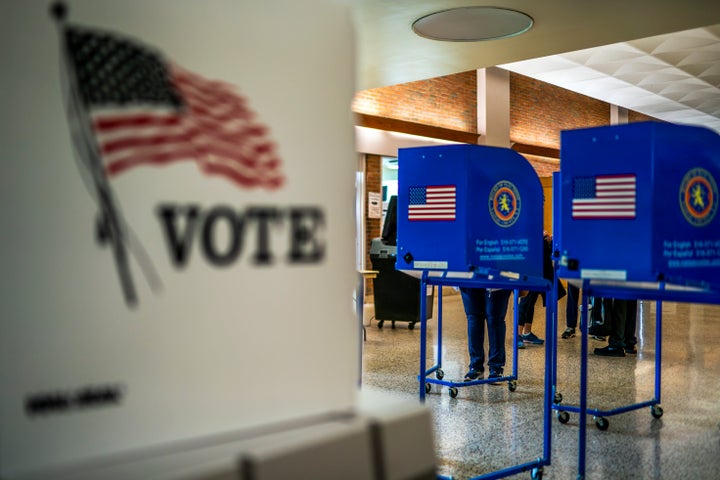
When the Supreme Court effectively killed the Voting Rights Act’s role in drawing districts in its opinion in Louisiana v. Callais, the first and most prominent casualties were majority-Black U.S. House seats throughout the South: Tennessee, Louisiana and Alabama all moved within weeks to kick Black Democrats out of office.

But they will not be the only losses.

The vast majority of districts created through litigation under Section 2 of the Voting Rights Act, which was at issue in Callais, are at the local level. These are seats on county councils, city councils, water boards, school boards, election commissions and so on.

Since its adoption in 1965 and amendment in 1982, Section 2 has been the primary tool used to expand electoral opportunities for Black, Latino, Asian and Native communities at all levels of government across the country. Where the Voting Rights Act has helped create dozens of seats in Congress, there are thousands of districts drawn for these offices across the country that helped give power to Black, Latino, Asian and Native communities.

Prior to its enactment, these minority communities were largely locked out of political power as white majorities manipulated election laws and district maps to exclude them from electing candidates of their choice. And that’s already becoming a reality again.

Just look at DeSoto County, Mississippi, a rapidly growing suburb of Memphis where the county council remains entirely white despite the Black population growing from 12% of the county in 2000 to 36% in 2022.

Black residents sued under the Voting Rights Act in 2024 to challenge the district maps that lock them out of council. Despite a 12-day trial where they presented a large volume of evidence showing the discriminatory effects of the maps, the Supreme Court’s decision intervened. In June, a district court judge ruled against the county’s Black residents, stating that they could not meet the new standards set forth in Callais.

“The Callais decision had made it impossible for us to meet the standards anymore,” said Brenda Wright, senior counsel with the NAACP Legal Defense Fund and lawyer for the DeSoto County plaintiffs. “That’s an example of the immediate impact in a case that was absolutely, extremely strong under the long-standing standards for proving a Section 2 case.”

The impact of the Voting Rights Act at the local level was massive in Mississippi. For example, Black voters went from holding zero seats on any of the state’s 82 county councils in 1964 to holding seats on 52 councils in 1980, according to recent research. Much of this early transformation occurred through the replacement of at-large election systems with district systems, with specific seats drawn for Black voters to pick their candidates. Black representation accelerated further after the 1982 amendment, which made it easier for plaintiffs to bring suits in court, and the subsequent round of redistricting after the 1990 Census.

“What you saw was a major transformation not just in the form of government creating more opportunities for single member districts to be the norm for school boards, county commissions and city councils, but you ended up seeing a boost in the number of representatives that were African-American and that represented African-American communities” said Kareem Crayton, vice president of the Brennan Center for Justice, a progressive nonprofit engaged in voting rights litigation.

For Latinos, the rise in representation through the Voting Rights Act has occurred most heavily in the 21st century as their population grew and voting rights advocates focused on litigation to expand their political power in city councils, county commissions, school boards and state legislatures.

“It’s been extraordinary,” Thomas Saenz, president and general counsel of the Mexican-American Legal Defense Fund, said about how the Voting Rights Act has helped Latino Americans. “It has been the tool to create initial seats at the local, state and congressional levels and now, more recently, it has been a tool to ensure that incumbents don’t reduce the growth in Latino seats.”

But thanks to the conservatives on the Supreme Court, many of these hard-won seats are now under threat.

Just one day after the Callais decision came down, Sen. Eric Schmitt (R-Mo.) sent a letter to Assistant Attorney General for Civil Rights Harmeet Dhillon calling for her to review all districts created under the Voting Rights Act in “states, counties, cities, school districts, and other political subdivisions” and bring lawsuits where necessary to reverse them.

“The Department should not wait for private litigants to identify every race-based district one by one,” Schmitt wrote. “The Civil Rights Division has participated in, monitored, or influenced redistricting litigation for years. It should therefore identify the universe of districts created, preserved, or defended under the old Section 2 regime and determine whether they survive Callais.”

“Senator — we are ON IT!” Dhillon replied in a post on social media.

State and local Republican officeholders have also begun to pressure legislators and local governments in places like Wyoming and Florida to review and eliminate districts created to provide representation for minority communities. So far, there has been little appetite from either Democratic or Republican state or local officials.

There is also litigation, both ongoing and new, challenging state and local districts drawn under the Voting Rights Act. The Supreme Court directed district courts to rehear challenges to Voting Rights Act districts in Mississippi and North Dakota in the wake of the Callais decision. Meanwhile, the Public Interest Legal Foundation, a conservative legal advocacy nonprofit, filed lawsuits challenging school board districts in Denver, Colorado and state legislative districts in Illinois to test how far Callais can reach.

But the fallout from Callais is only just beginning. Voting rights advocates anticipate attacks on state legislative seats and local elections to pick up steam ahead of 2028 and fully commence after the 2030 Census.

“We are going to see state legislative focus probably after November and we may begin to see some focus on local districts,” Saenz said.

What the DeSoto County case shows is that it will be nearly impossible to create new opportunity districts for minority representation going forward. That is a particular concern as nearly all new population growth in the South has come from Black, Asian and Latino communities. Callais promises to prevent states from ever being forced to draw districts to reflect their growing numbers.

There may be some mitigating factors for some communities. In the Callais decision, the conservative majority stated that plaintiffs must show that claims of racial discrimination cannot also be explained by partisanship. But many local elections across the country, and particularly in the West, are nonpartisan. The decision said nothing about what happens when partisanship is not an issue.

“If partisanship isn’t in the mix, it doesn’t seem that the defense under Callais should count, but the fact that we don’t know raises questions for me,” Crayton said.

Saenz hopes that a lawsuit that his organization brought in Stanislaus County, California, where local races are nonpartisan, can provide clarity on this. At the same time, the conservative Public Interest Legal Foundation’s lawsuit challenging Denver school board districts appears to also be an attempt to gain clarity, but with the intent of expanding Callais to cover nonpartisan elections.

If nonpartisan elections fall outside of Callais’ remit, Saenz suggests that other states and localities should adopt nonpartisan elections for local offices in order to blunt the decision’s impact.

But Callais’ failure to consider this question combined with the court’s subsequent decision allowing Alabama to eliminate a Black-majority seat that expanded Callais raises the specter that the justices aren’t to be trusted.

“This court is also an institution as of late that is hard to take at its word,” Crayton said.

Saenz also sees Callais as potentially less damaging to Latino representation than to other communities, as they are heavily concentrated in the West, where local races are nonpartisan, and their large population, high levels of community segregation, and other nonracial factors make it harder to target Latino-majority districts in states like Texas, where local elections are partisan.

“I am less concerned for the Latino community in local races than I am for other communities,” Saenz said.

There will be extensive damage done to the communities empowered by the Voting Rights Act if and when white Republican majorities move to use Callais to eliminate districts created under the law.

The representation and political power won by these communities is not immaterial. These offices helped direct government funds and support to help those communities previously ignored by white majorities. The expansion of Black representation at the local level in the South in the act’s first 15 years led directly to an increase in county-level spending directed to Black community interests. The same has been true in other communities.

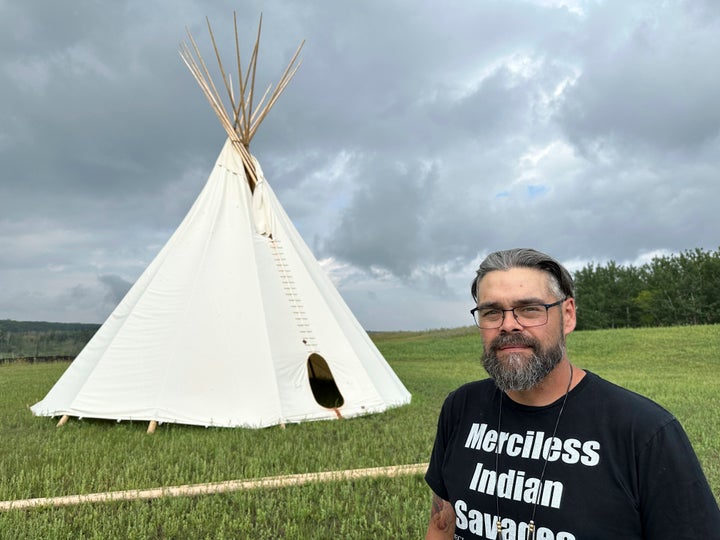
In 2022, the Lower Brule Sioux tribe sued to create a Native-majority district on the county commission in Lyman County, South Dakota, where 40% of the population is Native. The county and the tribe reached a settlement later that year and the creation of a Native-majority seat had immediate tangible benefits. This led directly to a council discussion about paving a road into the reservation for the first time, according to the Native American Rights Foundation, which represented the tribe.

In communities where English may be a second language for many residents, the lack of representation means vital information doesn’t reach them.

“It gives you access to information that is otherwise foreclosed,” Saenz said. “If you have a city council that is entirely non-Latino and basically hostile to the Latino community because they view them as a threat, then they’re not going to share information that is necessary for communities to engage in self-help.”

That is what is at stake for communities that could be targeted in Callais’ wake. And while no locality has faced attacks on representation won through the Voting Rights Act, Callais looms over the next round of redistricting in 2031. That is when communities may face the full brunt of the court’s decision to kill the Voting Rights Act.

By entering your email and clicking Sign Up, you're agreeing to let us send you customized marketing messages about us and our advertising partners. You are also agreeing to our Terms of Service and Privacy Policy.