yahoo Press
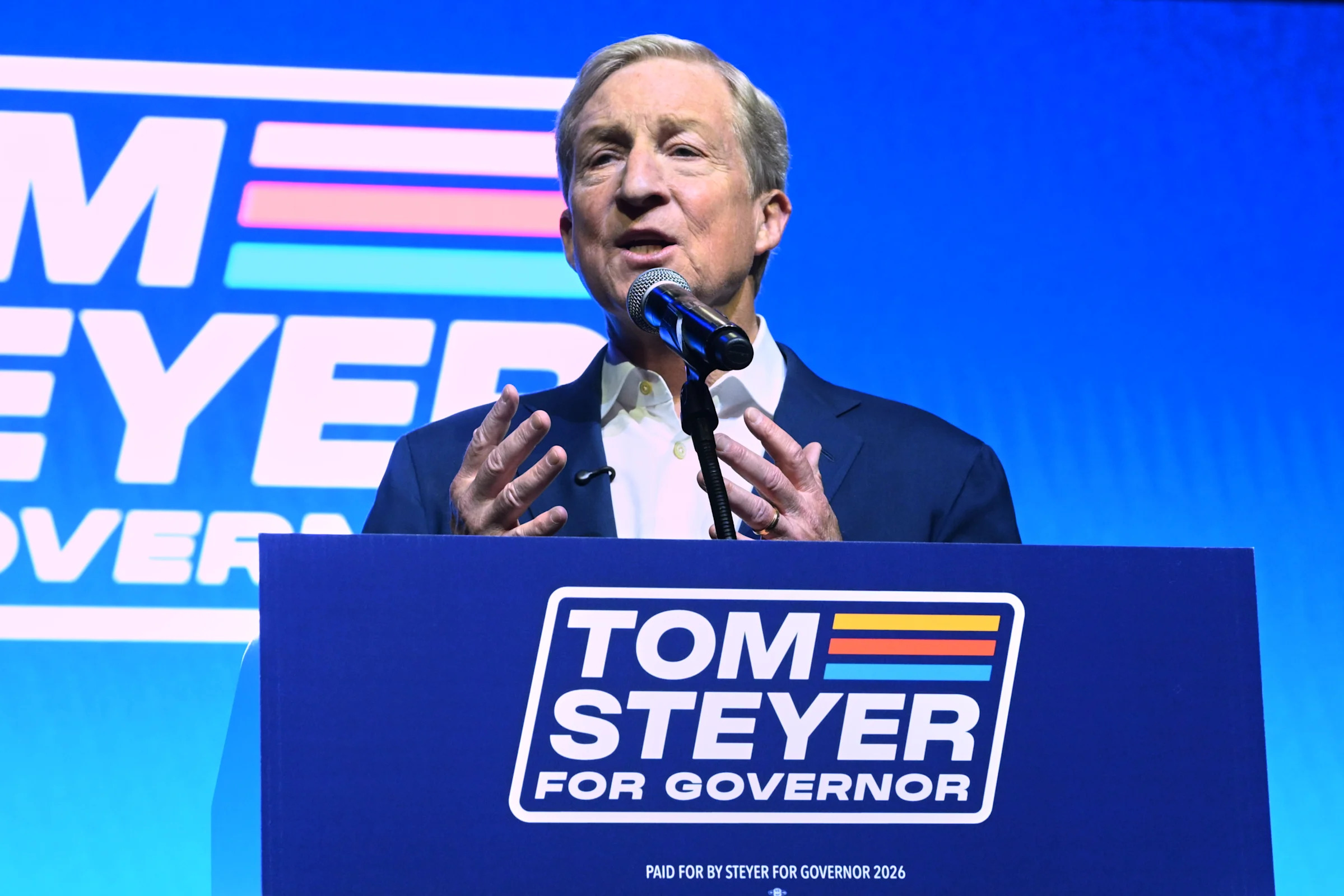
Steyer’s exit from the California governor’s race could spell bad news for climate policy
Images
1 / 7
2 / 7

3 / 7

4 / 7
5 / 7

6 / 7

7 / 7
A showdown between Xavier Becerra and Tom Steyer in the California governor’s race would have made climate policy one of the most talked-about issues through November.

Now, environmental advocates are preparing for their work to fade into the background.

Steyer, the billionaire climate activist who ran as a progressive, finished third in the primary behind Becerra and Republican Steve Hilton, the Trump-backed political commentator. His loss ended a campaign that spent millions on ads attacking Becerra for accepting oil industry money and promising to break up power companies.

“I’m proud of the enemies we made,” Steyer said in a concession statement Tuesday, singling out energy corporations like Chevron and PG&E that infused millions in independent expenditure committees opposing him.

Steyer also endorsed Becerra in that statement, saying it “would be a travesty” for Hilton to win the governorship.

In interviews earlier this week, environmental groups that supported Steyer’s campaign said their hopes were fading that the general election would feature the most climate-focused candidate to ever run for the office.

“It would have been lovely to have a sustained and intelligent debate on how climate is affecting all these other pocketbook issues in our state,” said RL Miller, president of Climate Hawks Vote Political Action. “But, at this point, I'm trying to cycle through the stages of grieving, and accept what is not going to be.”

Instead, voters helped Becerra, the former Health and Human Services secretary and state attorney general, emerge from the primary as the overwhelming favorite to replace Gov. Gavin Newsom. Becerra ran on affordability, with a heavy dose of skepticism toward California’s aggressive climate goals. He appealed to the Democratic establishment as a safe bet in a race with few standout options after former Rep. Eric Swalwell resigned amid sexual misconduct allegations.

Becerra told POLITICO just days before primary polls closed that the state’s plan to ban sales of new gas cars by 2035 is based on “a lot of inflated promises,” and said he wouldn’t jeopardize the state’s economy to meet a 2045 goal to phase out fossil fuels.

He will face questions about his plans to address California’s affordability crisis — including rising home insurance premiums linked to wildfires — but is unlikely to face pressure to define his climate agenda in a general election matchup against Hilton, said Garry South, a Democratic consultant who has run multiple statewide campaigns.

“If you have a Democrat who’s pro-choice running against a Republican who’s anti-abortion and right to life, the Democrat doesn't have to get all that specific about what they're going to do to protect a woman’s right to choose,” South said. “My suspicion is, that’s basically what Becerra will do on the issue of climate change.”

Some political observers argued that Steyer’s fall after attacking power companies and the oil industry — while infusing his campaign with $213 million from his own fortune — is a warning for the Democratic Party, more broadly, especially in swing states that could hold the key to the White House.

“I do think it's interesting and instructive for Democrats, the [Pennsylvania Gov. Josh Shapiro]’s of the world,” said Rob Stutzman, a veteran conservative strategist who has worked with the oil industry, earlier this week. “To see it backfire on the climate hawk in the primary … I think it will catch the attention of candidates and campaign strategists that are gearing up for the 2028 presidential primary.”

In the more immediate term, environmental groups say Steyer’s defeat represents a lost opportunity to reach millions of voters with messages about how climate change is contributing to the affordability crisis by raising housing and health care costs.

They argue that while statewide polling from organizations like the Public Policy Institute of California shows climate and environment as a low priority for voters compared to the economy, Steyer would have had an opportunity to connect the dots for those who respond more positively to climate policy when it’s clearly linked to affordability issues.

“It is incredibly important when you have somebody spending millions of dollars messaging on the issue of climate and clean energy and affordability,” said Matt Abularach-Macias, California Environmental Voters’ political and organizing director, on Monday. “That is really powerful in shaping public opinion in the minds of California voters.”

Before Steyer’s comeback hopes fully evaporated after the initial election-night tally, environmental lobbyists had begun weighing how a progressive climate hawk in the governor's mansion could shift the balance of power in Sacramento.

“I do think it would lead to a greater level of ambition,” said Ryan Schleeter, communications director for the Climate Center Action Fund. “Just to know that if you get a [climate] bill through the legislative process, you have a governor who's going to sign it.”

Progressive state lawmakers have, in recent years, watched the resurgence of moderate Democrats lead to an expansion of oil drilling in the Central Valley and blunted efforts to hold fossil fuel companies liable for climate disasters.

Steyer would likely have faced fierce pushback from the Legislature on some of his proposals, but environmental groups say he still could have forced lawmakers to have conversations about his climate policy priorities. And he would have had the power to reshape powerful agencies like the California Air Resources Board, which voted last month to weaken the state’s emissions trading program in an effort to reduce costs for oil refineries.

“I do think with the Steyer administration, we could have gotten a lot more ground, and it would have forced a lot more conversations than we were able to force last year,” said Katie Valenzuela, a policy consultant who works with environmental justice groups.

She added that she still hopes Becerra will lean into his environmental credentials and back away from his friendly posture toward oil companies once he begins campaigning against Hilton.

Becerra has highlighted that record in recent weeks, telling POLITICO in an interview that he’s been “one of the most aggressive and one of the most productive environmentalists in the country.”

Examples he’s cited include the expansion of an environmental justice bureau in the California Department of Justice and lawsuits defending climate policies as the state’s attorney general — including an earlier iteration of the state’s EV sales rules — during President Donald Trump’s first term.

And as the wildfires that devastated Los Angeles last year showed, California is only one natural disaster away from climate change being thrust back into the forefront of the state’s political discourse.

“Right now, Becerra probably feels pretty comfortable with being able to skirt around climate,” Schleeter said. “I don't think he'll be able to count on that for the rest of the race, and certainly not if he wins for four years as governor.”