yahoo Press
The Memo: Trump battered by sea of self-inflicted troubles
Images
1 / 6

2 / 6

3 / 6
4 / 6

5 / 6

6 / 6
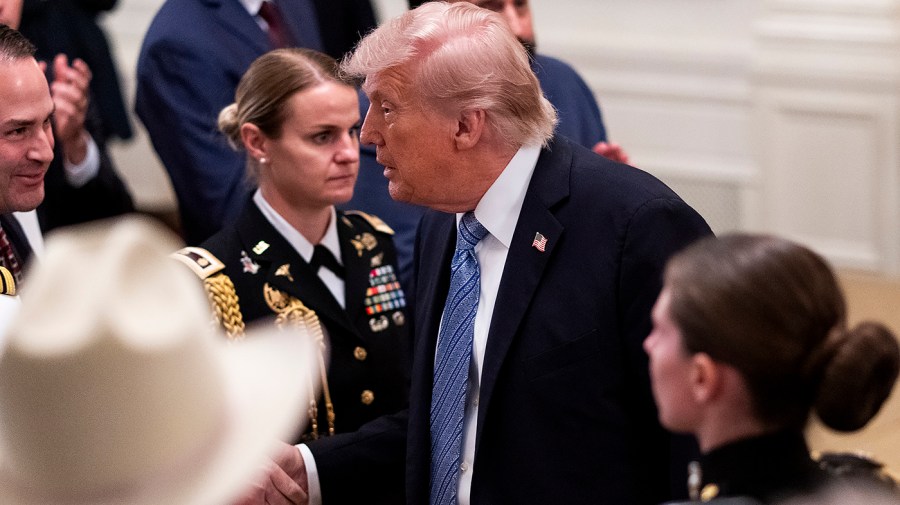
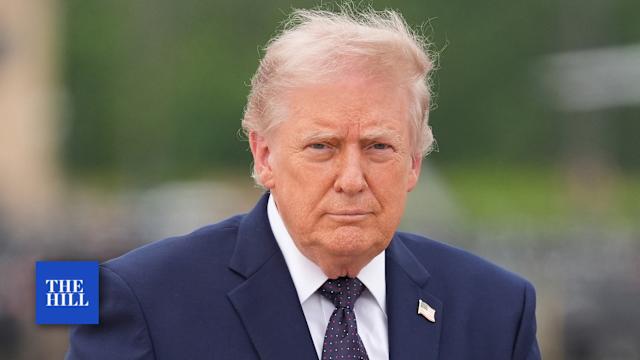
President Trump is beset by troubles as he heads into Memorial Day weekend — and, to the frustration of his party colleagues, several of them are of his own making.

The setting up of a roughly $1.8 billion compensation fund, purportedly to provide restitution for victims of “weaponization” of the justice system, is the latest furor.

Critics call the measure a slush fund, warning it will be used to funnel money solely to Trump supporters, perhaps including people convicted of Jan. 6-related offenses.

They also highlight the fund’s murky genesis as part of a deal to end a legal case Trump took against his own administration, seeking $10 billion over an earlier leak of his tax records.

The proposed fund has sparked outrage even among some in the GOP.

Sen. Thom Tillis (R-N.C.), called the idea “stupid on stilts” when he spoke with reporters at the Capitol on Thursday.

The following day, he complained on social media about “stupid stuff” that was hurting the party’s chances in November’s midterms — including “using billions of taxpayer dollars to compensate convicted felons and thugs who attacked police.”

Sen. Ted Cruz (R-Texas), speaking on his podcast “Verdict with Ted Cruz” on Friday, said that a meeting between skeptical GOP senators and Trump’s acting Attorney General Todd Blanche on Thursday, largely about the fund, had been “one of the roughest meetings that I’ve seen in my entire time in the Senate. There were a lot of Republican senators who were just pissed.”

The compensation fund sits alongside other efforts that give ammunition to Trump detractors who contend he has taken his eye off the issues that matter to the general public. The president’s new White House ballroom and his proposal for a large monument — which critics have nicknamed the “Arc de Trump” — are also part of this narrative.

Veteran GOP pollster Whit Ayres told this column that Trump was facing “the greatest challenge of his time in office, in either his first or second term.”

Ayres contended that Trump’s overall job approval had fallen so steeply that he had “broken through” what used to be seen as the floor of his support.

According to the polling average maintained by The Hill’s data partner Decision Desk HQ (DDHQ), Trump is now 20 points underwater, with his performance winning the backing of 39 percent of Americans and the disapproval of 59 percent.

“Donald Trump was elected to do four things: juice the economy, bring down inflation, stop illegal immigration and get away from ‘woke’ culture,” Ayres added. “He has done pretty well on the third and fourth, but public opinion on the economy and inflation is horrible. Seventy percent of Americans disapprove of his handling of inflation! That is getting down into Jimmy Carter territory.”

Meanwhile, on the global stage, Trump is still grappling with how to bring the war in Iran to a satisfactory close.

Two of the biggest issues — freedom of movement through the vital Strait of Hormuz and the fate of Iran’s existing stock of highly enriched uranium — are far from being resolved.

The New York Times reported Friday that Iran has been engaged in talks with Oman over a potential agreement on charging vessels a toll to transit the strait. The U.S. is officially opposed to such a system, even though Trump at one point in the past raised the idea of a revenue-sharing scheme.

The bottom line on the strait is that gas prices at home will remain elevated unless a solution is found. The average price of a gallon of gas nationwide Friday was $4.55, according to AAA. The price just before the war was slightly under $3.

Meanwhile, Reuters reported Thursday that Iran’s supreme leader, Mojtaba Khamenei, had ordered that the Islamic Republic’s uranium stockpile not leave the country. His stance would appear to foreclose any compromise by which the existing uranium could be held by a third country.

Brendan Steinhauser, a Texas-based GOP strategist, told this column that he was sympathetic to at least some of the arguments raised before the war that labeled Iran an unusually toxic threat that had to be addressed. But, he added, the economic effects at home were a political problem.

“Overall, he made the decision to bomb the Iranians with the Israelis, and it has led to cascading effects,” Steinhauser said of Trump.

Some in the GOP have complained that the war in Iran is an abandonment of the isolationism-inclined “America First” platform on which Trump was elected. But others argue he needs to take an even harder line.

Sen. Roger Wicker (R-Miss.) wrote Friday on social media that any proposed deal with Iran “risks a perception of weakness.”

Wicker added, “We must finish what we started.”

Trump continues to defend the decision to go to war in Iran, saying that it was necessary to prevent the Islamic Republic from acquiring a nuclear weapon. The president also contends that gas prices will come down fast when the conflict ends.

In a broader sense, Trump enthuses about the economy, which he frequently cites as a reason why the U.S. is the “hottest” nation in the world.

The problem is, voters don’t appear to be buying it. An Economist/YouGov poll released earlier this past week found a mere 22 percent of Americans saying the economy was “excellent” or “good” and 75 percent saying it was “poor” or “fair.”

On top of all this, speculation is building that the Trump administration could soon move against the leadership of Cuba.

CIA Director John Ratcliffe met with officials on the island just last week, and former Cuban President Raúl Castro, brother of the late Fidel Castro, was indicted by the Justice Department on Wednesday on charges including murder.

Sen. Lindsey Graham (R-S.C.), a close Trump ally, wrote on social media late Friday afternoon that he believed “the liberation of the wonderful people of Cuba from the clutches of communism is close at hand.”

At home, a move to force some manner of regime change in Havana would appeal to the vehemently anti-Castro Cuban community concentrated in South Florida.

But if any part of the plan went awry, it would further fuel the view that Trump has got distracted from voters’ priorities, to their detriment and his own.

The Memo is a reported column by Niall Stanage.

Copyright 2026 Nexstar Media, Inc. All rights reserved. This material may not be published, broadcast, rewritten, or redistributed.

For the latest news, weather, sports, and streaming video, head to The Hill.