Press
What is a 'safe death'? Mentally ill woman asks for assisted dying in Canada
Images
1 / 10

2 / 10
3 / 10
4 / 10
5 / 10
6 / 10
7 / 10

8 / 10

9 / 10

10 / 10
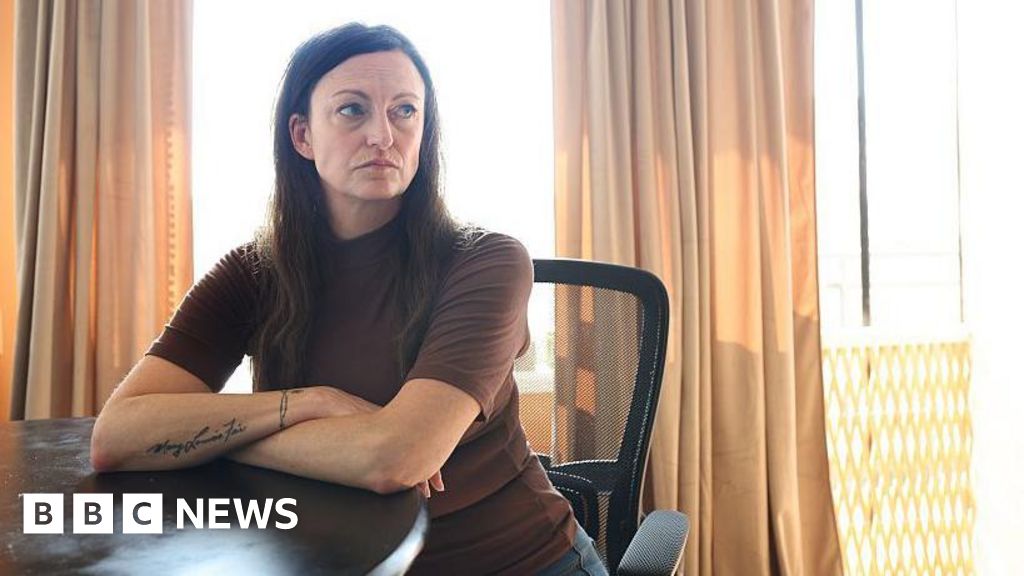
Claire Brosseau has travelled the world doing stand-up comedy and acting in television shows, films and plays. She has also been struggling with diabilitating mental illness from a young age, and has been treated by psychiatrists in four major North American cities over three decades.

Brosseau has tried nearly every treatment available to people like herself with bipolar disorder and PTSD, she said, from behavioural therapy and medication to electric shocks to the brain.

Nothing has worked for the 49-year-old Toronto woman, who described herself as "functionally terminal", no longer able to work, leave the house or speak with her loved ones. She is now enrolled in a psychiatric care programme at a local hospital that, she said, is designed to support people with severe and persistent mental illness who have exhausted all treatment options.

"There's nothing left to try, and I'm at the end of my life," she told the BBC.

Brosseau wants to die by medically assisted dying, also known as euthanasia and in Canada, under the acronym MAID. While it is legal in Canada, it is not currently available to those whose sole condition is mental illness.

"I open my eyes every morning and I feel immediate dread and anxiety," Brosseau said, adding: "I want a safe death. I don't want to have to do something horrific."

Canada has been planning to expand the law to people with severe, treatment-resistant mental illness, but has delayed doing so twice - most recently to next year - over concerns the healthcare system is not prepared. Now, Ottawa is weighing whether to move forward at all.

In the meantime, Brosseau said her illness is worsening and she cannot afford to wait any longer. She has asked an Ontario court to exempt her from the current law and grant her access to medically assisted dying.

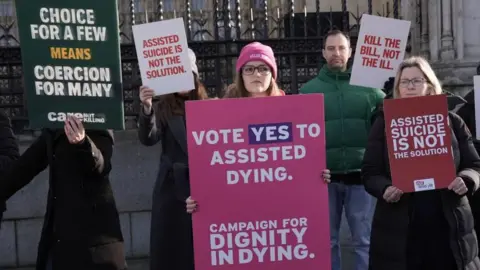
Polls suggest the majority of Canadians support access to medically assisted death. But the issue has been more fraught when discussing patients with mental illness.

Over the past two months, a parliamentary committee tasked with reviewing whether Canada should expand the programme heard from advocates and medical experts who warned against doing so.

Some argue that assisted dying has, in some cases, become a tool to alleviate suffering of disabled Canadians who would be better served by improved access to affordable housing, healthcare and disability supports.

Others argued that mental illnesses are not yet well understood by medicine, making it difficult to determine if a patient is expressing suicidal ideation or is indeed incurable.

Dr Sonu Gaind, a former chief of psychiatry at a major Toronto hospital, told the committee that "none of those issues have been resolved" since Canada decided to pause its expansion to assisted dying.

"Instead, we have even more evidence showing we are not ready to provide MAID for mental illness," he said.

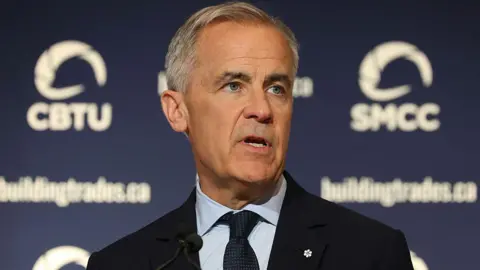
What the committee recommends could ultimately shape the programme's future. Prime Minister Mark Carney told reporters last week that he is waiting for their report before deciding on next steps. "I like to take informed positions," he said.

For Brosseau, the refusal to grant assisted death to psychiatric patients is rooted in stigma, with physical illnesses viewed as more legitimate.

"If I get cancer tomorrow, I can refuse treatment and be eligible for MAID," she said. But patients with severe mental illnesses, she argued, aren't granted the same access to what has become a standardised part of Canadian healthcare.

That position is at the core of the legal case brought by Brosseau, which argues that  current laws are exclusionary to those with mental illness and therefore unconstitutional.

Canada is one of a handful of countries where assisted dying is legal for both terminally ill patients and those whose death is not "reasonably foreseeable" but who have an irreversible serious illness, disease or disability.

A few, namely the Netherlands, Belgium and Luxembourg, allow access to people who are suffering solely from a mental illness.

The Netherlands is in the midst of its own heated public debate on assisted dying, which has spilled into the Canadian committee hearings.

Those seeking assisted death for a mental illness in the Netherlands have to be assessed by a psychiatrist. Data shows that approvals for psychiatric suffering are relatively rare, accounting for about 2% of all deaths by assisted dying in the country. But the overall number of approved cases has risen, from two in 2010 to 219 in 2024.

One Dutch psychiatrist, Dr Jim van Os, told Canadian lawmakers that the increase in cases reflects what he described as a "suicide contagion effect".

"The Dutch experience in my opinion offers a warning for Canada," Os cautioned.

Another Dutch psychiatrist, Dr Sisco Van Veen, countered that assisted dying for psychiatric patients remains rare and that MAID offers "mercy" for those "whose suffering can be immense or unbearable".

In Canada, about 96% of assisted-dying requests in 2024 were granted to people whose death was forseeable - mostly terminal cancer patients. The remaining 4% are patients whose death was not imminent but had a "grievous and irremediable medical condition".

Canada extended assisted dying to patients who were not terminally ill five years ago, after two people with disabilities mounted a legal battle for access to the programme.

That move has been controversial, and is one of the reasons driving opposition to further expansion.

Advocacy groups have reported cases where assisted dying has been offered to people with disabilities by healthcare or support workers without the patient requesting it themselves.

"We are investing in ending people's lives" rather than in offering them a better quality of life, said Krista Orr, president of disability advocacy group Inclusion Canada,

She, too, testified before the committee, urging lawmakers not only to not expand MAID to people with mental illness but to limit it once again solely to people with a terminal illness.

There has also been criticism of the committee itself. Brosseau, for one, said she is troubled by how the hearings unfolded and who was called to testify. She said she requested to appear multiple times but was refused.

She noted that the co-chairs of the committee - Liberal MP Marcus Powlowski and Conservative Senator Yonah Martin - have both publicly voiced opposition to expanding MAID.

One member, Alberta Senator Kristopher Wells, has publicly accused the review of being "one-sided", telling the Toronto Star newspaper that he does not have confidence in the final report.

In a statement to the BBC, the  committee  co-chairs acknowledged that Brosseau had asked to testify, but said evidence from professionals and associations was proritised due to "limited time".

Powlowski also defended the committee against accusations of bias, telling the Star that members have "dutifully listened to both sides".

Their report could be presented to parliament as late as October.

Brosseau said she does not have faith in the committee, its report or the federal government, which has yet to respond to her legal challenge.

She rarely leaves her home. Even a trip to the store can trigger extreme stress and panic attacks, she said. But she said she viewed her legal fight as an important one for equal rights.

"I'm not campaigning for death. I'm campaigning to be seen as not a subsection of human," she said.

Health correspondent James Gallagher absorbs more than the recommended daily limit in just one meal to find out how salt affects our bodies.

What are the most pressing priorities for the new minister in charge of health?

Cynthia Spencer Hospice opened in 1976 and was named after the earl's grandmother.

Trials on veterans suggest the potent hallucinogen could provide a new treatment for PTSD, but scientists still don't know how it works.

A college student has died and two people are being treated after cases of meningitis in Reading, Berkshire.