foxnews Press
AI data centers may soon ride ocean waves
Images
1 / 20

2 / 20

3 / 20

4 / 20
5 / 20

6 / 20

7 / 20

8 / 20

9 / 20

10 / 20

11 / 20

12 / 20

13 / 20

14 / 20

15 / 20

16 / 20

17 / 20

18 / 20

19 / 20

20 / 20
Fox News Flash top headlines are here. Check out what's clicking on FoxNews.com.

Artificial intelligence (AI) already shows up in your phone, your searches and plenty of apps you use every day. Now, some Silicon Valley investors are betting the machines behind those AI answers could one day run at sea.

A company called Panthalassa has raised $140 million in new funding to develop and deploy autonomous, floating AI computing nodes powered by ocean waves. The Series B round brings Panthalassa's total funding to $210 million, a sign that investors are taking this ocean-based AI idea seriously. The round was led by Peter Thiel, the Palantir co-founder, and the company says the money will help complete a pilot manufacturing facility near Portland, Oregon. Panthalassa also plans to deploy its Ocean-3 pilot node series in the northern Pacific Ocean later in 2026.

Instead of building another giant AI data center on land, Panthalassa wants to place computing power out at sea. Ocean waves would generate electricity. Seawater would help with cooling. Onboard computing systems would process AI prompts and send the results back to land through low-Earth-orbit satellites.

 Sign up for my FREE CyberGuy Report

LOWERING YOUR ELECTRIC BILL COULD BE FLOATING IN THE OCEAN

META BUILDS WORLD’S LARGEST AI SUPERCLUSTERS FOR THE FUTURE

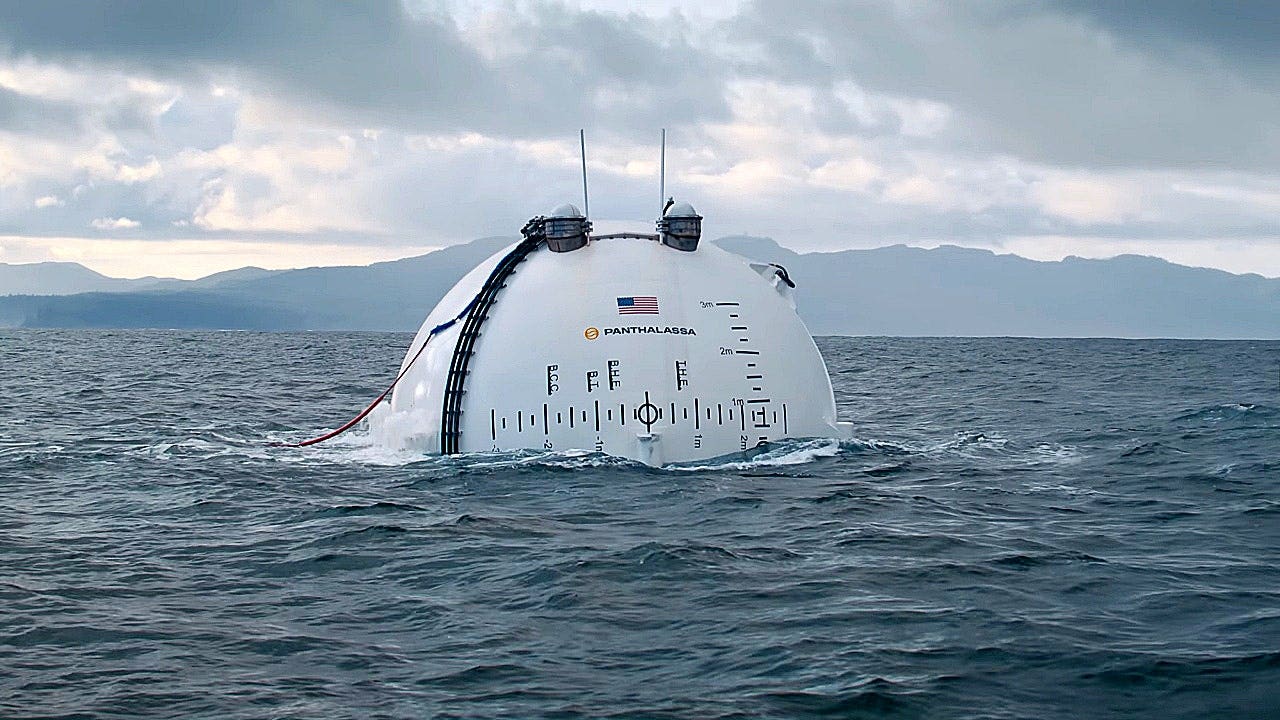
Panthalassa’s Ocean-2 prototype rides in open water during testing, giving a real-world look at the kind of floating wave-energy system behind the company’s ocean AI plan. (Panthalassa)

Panthalassa's floating nodes are designed to capture wave motion and turn it into electricity. The company says it has spent a decade developing the technology behind its power generation, onboard computing and autonomous ocean operations. Its earlier Ocean-1, Ocean-2 and Wavehopper prototypes were tested in 2021 and 2024. Think of each node like a floating power station with AI hardware inside. Waves move the system. That motion helps drive a generator. The power then feeds the onboard chips.

WHY AI IS CAUSING SUMMER ELECTRICITY BILLS TO SOAR

The company's plan is to use those chips for AI inference. That is the part of AI where a model responds to your prompt after it has already been trained. In simple terms, it is what happens when you ask a chatbot a question and get an answer back. That makes the ocean plan a little easier to understand. Training massive AI models requires huge data movement and tight coordination. Answering prompts may be more realistic for a floating node, at least in some situations.

AI data centers need huge amounts of electricity. They also need space, cooling systems and local support from communities that may not want a massive facility nearby. Those problems have pushed companies to look for unusual answers. Ocean-based computing is one of them.

Panthalassa says its nodes would operate far from shore in wave-rich parts of the ocean. The goal is to use that wave energy directly onboard instead of sending the power back to land. "We've built a technology platform that operates in the planet's most energy-dense wave regions, far from shore, and turns that resource into reliable clean power," said Garth Sheldon-Coulson, Panthalassa's co-founder and CEO.

A SUPERCOMPUTER CHIP GOING TO SPACE COULD CHANGE LIFE ON EARTH

The ocean also offers cold surrounding water. That could help cool the chips onboard. Cooling is a major issue because data centers produce a lot of heat. Panthalassa is taking a different path from traditional land-based data centers. Instead of pulling more power from the grid, it wants floating nodes that generate their own electricity from waves.

A SUPERCOMPUTER CHIP GOING TO SPACE COULD CHANGE LIFE ON EARTH

The Ocean-2 prototype sits inside a coastal facility, showing the size and shape of Panthalassa’s floating node before deployment at sea. (Panthalassa)

The ocean may help with power and cooling, but it creates another problem: connection. Traditional data centers rely on high-capacity fiber-optic connections because they need to move huge amounts of data fast. A floating node far out at sea may depend on low-Earth-orbit satellite links. That can work for some AI responses, but it may be slower and more limited than fiber.

SOLAR DEVICE TRANSFORMS USED TIRES TO HELP PURIFY WATER SO THAT IT'S DRINKABLE

The challenge grows when multiple nodes need to work together. AI systems often depend on fast communication between chips, servers and storage. If those parts are floating in the ocean and talking by satellite, coordination gets harder. That means AI data centers at sea may not replace land-based data centers anytime soon. They may be better suited for certain AI tasks where the model can live onboard, and the response does not require constant back-and-forth with other machines.

There is another practical question: What happens when something breaks? A land-based data center can send in technicians. A floating AI node in rough seas may need a ship, special equipment and the right weather window. That adds cost and delay.

Panthalassa says it is developing autonomous systems meant for harsh ocean conditions. Its press release says Ocean-3 testing is meant to demonstrate AI inference and refine manufacturing before commercial deployments in 2027. Still, the ocean is brutal. Saltwater eats away at equipment. Storms can turn a routine repair into a major operation. Constant motion also puts stress on the hardware. For this plan to work, Panthalassa will have to show that each node can keep running for years in harsh ocean conditions without frequent human repairs.

WHY AI IS CAUSING SUMMER ELECTRICITY BILLS TO SOAR

Panthalassa’s Ocean-2 prototype is transported by barge, a reminder that building AI infrastructure at sea also means solving major deployment and maintenance challenges. (Panthalassa)

Ocean data centers are not new. Microsoft experimented with underwater data center servers through Project Natick, including tests in 2015 and 2018. Those tests showed that sealed underwater servers could run reliably while using seawater for cooling, with Microsoft reporting a lower failure rate than comparable land-based systems. Microsoft later ended the project.

Chinese companies have also reportedly pushed ahead with underwater data center projects near Hainan and Shanghai. Keppel has explored floating data center designs in Singapore, where land constraints make the concept especially attractive. Panthalassa's plan goes in a different direction. It combines wave power with onboard AI chips and satellite-based results. It also depends on floating nodes that would need to operate far from the kind of support a normal data center gets. That is why the idea is getting attention. It is also why skepticism is fair.

FOX NEWS AI NEWSLETTER: SCAMMERS CAN EXPLOIT YOUR DATA FROM JUST 1 CHATGPT SEARCH

For now, this will not change how your phone or computer works. You will not suddenly see a "powered by ocean waves" label on your favorite AI app. But the bigger picture affects everyone. AI needs an incredible amount of electricity. As more companies add AI tools to their products, they need more places to run those systems. That pressure can affect energy grids, water use, local battles over new data centers and even your utility bills over time.

Panthalassa argues its approach could reduce the need for new data centers and power plants on land. That could ease pressure on local communities and the grid, but the company still has to prove the system can work reliably at sea. If ocean-based AI moves beyond testing, it could also raise fresh questions about marine maintenance, environmental oversight and who controls computing infrastructure in international waters.

Take my quiz: How safe is your online security?

Think your devices and data are truly protected? Take this quick quiz to see where your digital habits stand. From passwords to Wi-Fi settings, you’ll get a personalized breakdown of what you’re doing right and what needs improvement. Take my Quiz here: Cyberguy.com

CLICK HERE TO DOWNLOAD THE FOX NEWS APP

Everyone is using AI on their phones and computers these days, but the heavy lifting often happens in huge data centers behind the scenes. That is why Panthalassa's ocean plan is getting attention. The company wants to use waves for power and seawater for cooling. The hard part is proving that floating AI nodes can survive rough seas, limited satellite links and complicated maintenance. If Panthalassa can pull it off, ocean-based AI could become part of the tech we use every day. If it cannot, it may show just how difficult it is to keep feeding AI's growing demand for power.

If this kind of ocean-powered AI takes off, would you worry about what these floating nodes could mean for our oceans? Let us know by writing to us at Cyberguy.com

Sign up for my FREE CyberGuy Report

Copyright 2026 CyberGuy.com. All rights reserved.

Kurt "CyberGuy" Knutsson is an award-winning tech journalist who has a deep love of technology, gear and gadgets that make life better with his contributions for Fox News & FOX Business beginning mornings on "FOX & Friends." Got a tech question? Get Kurt’s free CyberGuy Newsletter, share your voice, a story idea or comment at CyberGuy.com.

Get a daily look at what’s developing in science and technology throughout the world.

Subscribed

You've successfully subscribed to this newsletter!