yahoo Press
The chances of a rare 'super El Niño' occurring in 2026 just got higher. Here's how it could wreak havoc on the weather.
Images
1 / 8
2 / 8

3 / 8

4 / 8

5 / 8
6 / 8

7 / 8

8 / 8
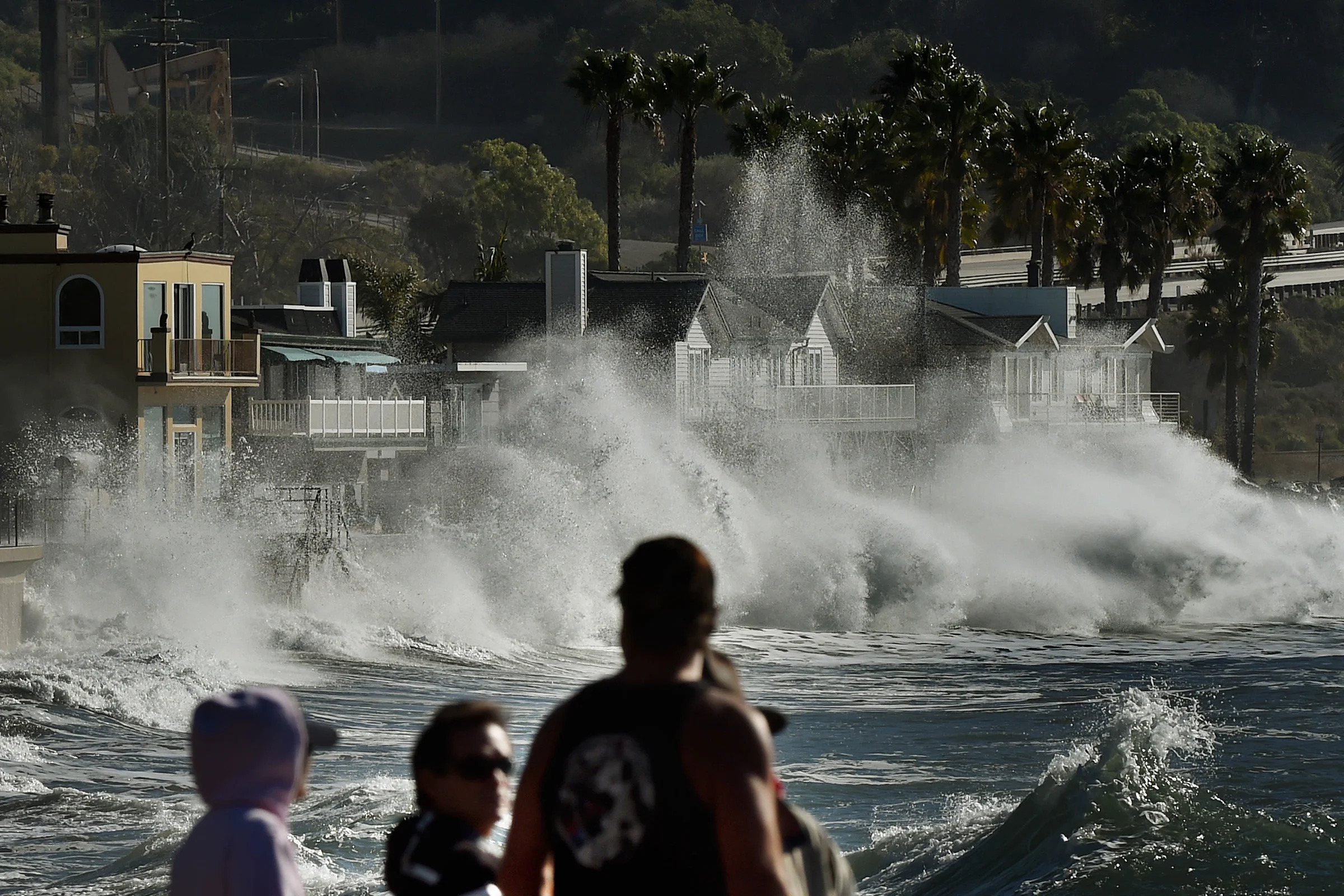
It’s happened only four times since 1950. But the odds are increasing that a so-called “super El Niño” could strike again in 2026, turbocharging hurricane activity in the Pacific Ocean, saddling the southern half of the United States with a much cooler and wetter winter and ultimately fueling what could turn out to be the warmest year on record.

The latest forecast from the National Weather Service (NWS), released on Thursday, says there’s now an 82% chance of El Niño taking hold by July — up from 61% previously — and a 96% chance of the climate phenomenon lasting through the winter. That’s a near lock.

What’s less certain is how strong this year’s El Niño will be. According to the new NWS forecast, however, the odds of a “super El Niño” occurring between November 2026 and January 2027 have risen from 25% last month to 37% today — meaning that the U.S. and the world as a whole might be in for some wild weather later this year. The overall odds of a “stronger” El Niño are about two in three.

Here’s what El Niño is — and how its rare “super” variant could wreak havoc come winter.

Normally, Pacific trade winds blow west across the equator, carrying warm South American water toward Asia. Cold water then “upwells” from the depths to replace the warmer surface water that’s been pushed away.

El Niño is a natural climate cycle that disrupts this pattern. It’s triggered by weaker-than-usual trade winds — winds that end up allowing much of that warm water to flow back toward the west coast of the Americas.

Ultimately, that warmer water forces the Pacific jet stream — a high-altitude air current that acts as a 7,000-mile “conveyor belt” pushing storms east across the Pacific toward North America — to move south of its usual path, altering weather patterns across the U.S. and the globe.

La Niña is the exact opposite: stronger trade winds, colder water and a Pacific jet stream that moves north rather than south.

El Niño and La Niña happen roughly every two to seven years and last nine to 12 months. El Niño generally arises more frequently than La Niña.

Meteorologists measure the strength of El Niño by how much the water temperature rises above average in a patch of the equatorial Pacific. The threshold for a weak El Niño is 0.5 degrees Celsius. Right now, the temperature is just below that mark, but NWS expects it to warm into weak El Niño territory sometime next month.

According to CNN, “That’s a notable change from last month’s update, which favored neutral conditions — neither El Niño or its cooler counterpart La Niña — through June.” The reason? There’s a “vast pool of warm water that’s built up in the depths of the central and eastern equatorial Pacific in recent weeks.”

So conditions are increasingly favoring an El Niño of some sort. But to become a super, or “very strong,” El Niño, the equatorial Pacific would ultimately need to heat up by 2 degrees Celsius. That’s a lot less common. Still, scientists can see it happening if the trade winds continue to weaken in sync with rising ocean temperatures. Already, some “typically reliable computer models show this year’s potential “super El Niño” could even be the strongest on record,” CNN reports.

If a “super El Niño” develops in 2026, it would be the first since 2015-2016 — one of the strongest on record, according to the National Oceanic and Atmospheric Administration (NOAA). Others occurred in 1997-1998, 1982-1983 and 1972-1973.

It’s hard to say exactly. The 2015-2016 “super El Niño,” for example, didn’t deliver a wetter-than-average winter in Southern California — one of its typical trademarks.

But some effects are relatively predictable.

On Monday, NOAA said it’s “very likely” 2026 will be one of the five hottest years on record. That’s without accounting for El Niño’s warming impact. A “super El Niño” could make 2026 or 2027 the hottest year on record, displacing 2024.

Stronger El Niños also tend to flip the usual hurricane-season equation, suppressing storms in the Caribbean and tropical Atlantic while amplifying them in the central and eastern Pacific. More tropical threats to Hawaii and the Southwest U.S. are a possibility.

Extremes of wetness and dryness — and heat and cold — are possible as well. Winter tends to get warmer in the northern half of North America and cooler and wetter in the southern half, especially in the Southeast and along the Gulf Coast. Elsewhere, drought could afflict the Caribbean, while India and Southeast Asia might see fewer summer monsoons.

Either way, “stronger El Niño events do not ensure strong impacts; they can only make certain impacts more likely,” Michelle L’Heureux, a physical scientist at NOAA, told USA Today. And “there is still enough uncertainty that seeing a weaker outcome would not be a surprise.”