foxnews Press
Regulators allow Obama-era solar plant to kill thousands of birds annually, investigation finds
Images
1 / 20

2 / 20

3 / 20

4 / 20

5 / 20

6 / 20

7 / 20

8 / 20

9 / 20

10 / 20

11 / 20

12 / 20

13 / 20

14 / 20

15 / 20

16 / 20

17 / 20

18 / 20

19 / 20

20 / 20
A bird appears to smoke after flying through concentrated solar beams, known as "solar flux," at the Ivanpah Solar Power Plant in 2016, according to the U.S. Geological Survey. (U.S. Geological Survey)

SAN BERNARDINO, Calif. – Regulators are allowing an Obama-era "clean energy" solar plant to continue operating even as its reflected solar beams kill thousands of birds each year, with no fines or enforcement action taken since it opened, a Fox News Digital investigation has found.

The Ivanpah Solar Power Plant, a sprawling facility built with taxpayer support in the Mojave Desert near the California–Nevada border, remains in compliance under existing regulations, even as birds are burned, injured or killed after flying through the beams which reflect sunlight onto the plant's three central towers.

Regulators were aware of those risks before approving the project as part of a broader push to expand renewable energy. Today, it remains in compliance, meaning the wildlife deaths documented at the site fall within limits set under its environmental approvals. That framework allows the plant to continue operating even as thousands of birds are killed each year.

OBAMA-ERA 'CLEAN ENERGY' SOLAR POWER PLANT STILL USES FOSSIL FUELS – AND KILLS THOUSANDS OF BIRDS ANNUALLY

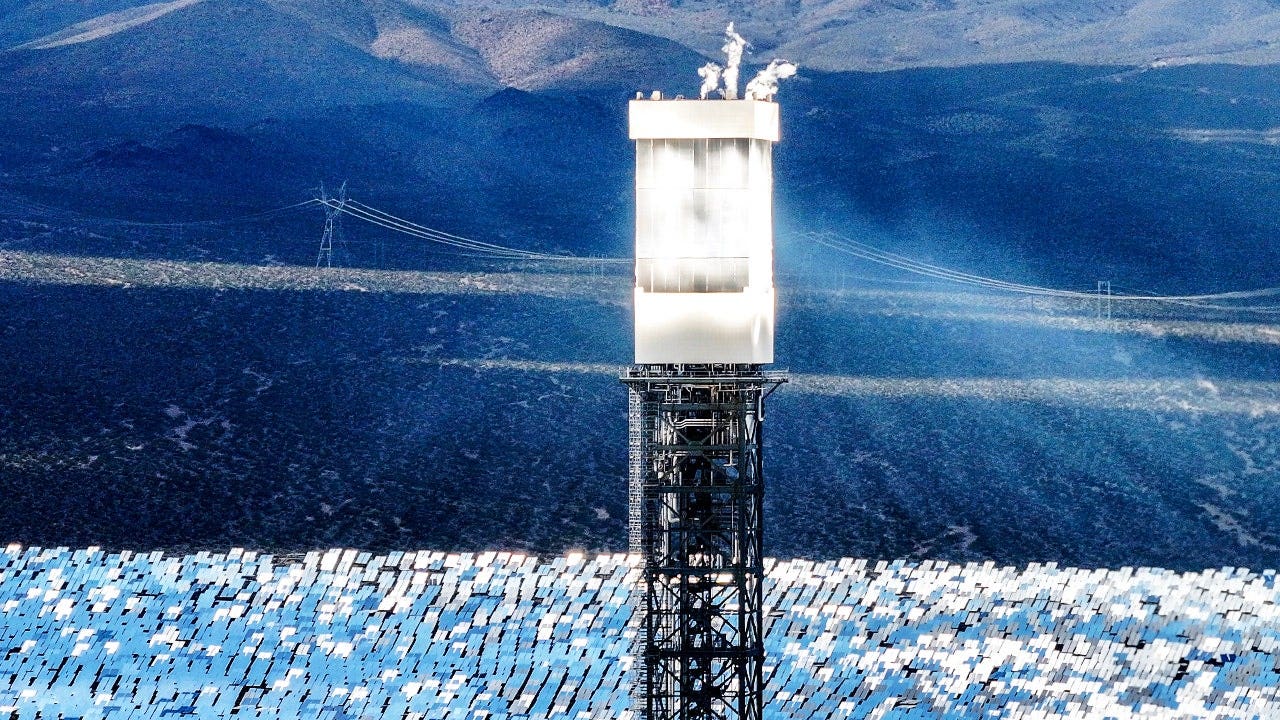
The Ivanpah Solar Power Facility near the California–Nevada border in the Mojave Desert. The solar thermal plant has faced scrutiny over environmental impacts, including bird deaths linked to its concentrated solar energy system. (Jeff Gritchen/MediaNews Group/Orange County Register via Getty Images)

"Staff is not aware of any formal enforcement actions or fines issued by either the U.S. Fish and Wildlife Service or the California Department of Fish and Wildlife related to avian or wildlife mortality at the Ivanpah Solar Electric Generating System," the California Energy Commission, which oversees large energy projects in the state, told Fox News Digital.

The commission also said it knows of no special regulatory exemptions for renewable energy projects related to wildlife impacts. Instead, the project was approved as long as monitoring and mitigation requirements would be carried out, meaning some level of wildlife mortality was anticipated.

The futuristic-looking facility, known for its three large towers that glow brightly when powered on, was approved during the Obama-era push to rapidly expand renewable energy following the 2008 financial crisis — part of a broader effort to cut emissions and reduce reliance on fossil fuels in the name of climate change.

At the time, it was hailed as the future of "clean energy" technology, and the federal government provided a $539 million grant for its construction, along with a separate $1.6 billion loan.

But its technology quickly became outdated by conventional solar panels that absorb sunlight directly and convert it into electricity, making Ivanpah's energy more expensive to produce. The plant also relies on natural gas to start up each day – producing tens of thousands of metric tons of carbon dioxide annually.

CALIFORNIA'S GREEN NEW SCAM COULD COST YOU $20,000

A composite image shows a tower at the Ivanpah Solar Power Plant alongside a bird found with burn injuries linked to concentrated solar heat exposure, according to federal wildlife research. (Jeff Gritchen/MediaNews Group/Orange County Register via Getty Images; U.S. Fish and Wildlife Service)

Researchers say birds are drawn to the bright towers, then fly through the plant’s concentrated solar beams — known as solar flux — where they can be injured or killed. Researchers dubbed the phenomenon "streamers," and a video released by the U.S. Geological Survey shows a bird trailing smoke as its feathers burn. Songbirds, doves, warblers and other migratory species have been found dead at the plant.

Environmental reviews examined by Fox News Digital show that regulators were aware before construction that the project could kill birds, either by being burned by the plant’s concentrated sunlight or colliding with the tens of thousands of mirrors that surround the three towers like lakes. They also raised concerns about damage to the 4,000-acre physical desert habitat it was going to occupy, as well as to protected species that roam the barren terrain, such as the endangered desert tortoise, dozens of which went unaccounted for during early operations.

The project’s Final Environmental Impact Statement warned that climate efforts could come "at the expense of reducing the native biodiversity."

Even with those warnings, regulators approved the project, allowing it to move forward on the basis that ongoing monitoring and mitigation requirements would be carried out, rather than requiring those risks to be resolved.

A 2016 congressional review raised similar concerns, finding no clear evidence that federal agencies had pursued penalties for bird deaths at Ivanpah — a pattern that appears to have continued.

A peregrine falcon wing shows severe feather damage consistent with exposure to concentrated solar heat, according to a U.S. Fish and Wildlife Service study of the Ivanpah solar plant. (U.S. Fish and Wildlife Service)

Burned feathers from a peregrine falcon show damage patterns linked to concentrated solar beams at the Ivanpah solar plant, according to federal research. (U.S. Fish and Wildlife Service)

The plant is regulated under a system that tracks wildlife deaths but does not automatically trigger fines or shutdowns.

Monitoring reports show hundreds of birds are found dead at the site each year, with some estimates putting the total in the thousands.

Responsibility for enforcement is shared across multiple agencies, including the U.S. Fish and Wildlife Service, the California Department of Fish and Wildlife and the Bureau of Land Management, each of which has authority over different aspects of the project, the CEC said.

The U.S. Fish and Wildlife Service said it reviews monitoring data and provides technical input but did not indicate enforcement action tied to bird deaths at the site.

NRG Energy, which operates the facility, said in a previous statement it remains committed to providing renewable electricity but declined to provide additional comment regarding environmental issues.

CLICK HERE TO DOWNLOAD THE FOX NEWS APP

The Ivanpah Solar Power Facility operates in the Mojave Desert near the California–Nevada border, using thousands of mirrors to focus sunlight onto a central tower to generate electricity. (MediaNews Group/Orange County Register via Getty Images)

Instead of being treated like a typical environmental violation, the project is governed through a permitting system that emphasizes monitoring and mitigation rather than penalties.

In practice, that means harm can be documented without triggering enforcement action even though federal authorities have pursued penalties for bird deaths in other industries.

Under federal law, violations involving protected migratory birds can carry fines of up to $15,000 per bird.

Such prosecutions of industry have become rare in the United States, however. In 2017, the Department of the Interior reinterpreted the Migratory Bird Treaty Act to apply only to intentional killings — not "incidental" deaths caused by industrial activity such as oil pits, power lines or wind turbines. Federal courts, including the Fifth Circuit, have since reinforced that narrower reading, limiting the government's ability to penalize companies for equipment-related bird deaths.

But even efforts to reduce harm — including deterrents, lighting changes and operational adjustments — have not eliminated the problem at Ivanpah, with monitoring reports continuing to document annual wildlife deaths.

More than a decade later, Ivanpah shows what that system looks like in practice: a project approved as clean energy that kills wildlife, relies on fossil fuels and continues operating without penalties.

WATCH: Experts weigh in on future of $2.2B Obama-era Ivanpah solar plant as regulators keep it open

This is part 3 of a series on California's troubled Ivanpah Solar Power Plant in the Mojave Desert

Part 1 - Obama-backed $2.2B green energy 'boondoggle' leaves taxpayers on the hook

Part 2 - Obama-era 'clean energy' solar power plant still uses fossil fuels – and kills thousands of birds annually

Michael Dorgan is a writer for Fox News Digital and Fox Business.

You can send tips to michael.dorgan@fox.com and follow him on Twitter @M_Dorgan.

Get the latest updates from the 2024 campaign trail, exclusive interviews and more Fox News politics content.

By entering your email and clicking the Subscribe button, you agree to the Fox News Privacy Policy and Terms of Use, and
        agree to receive content and promotional communications from Fox News. You understand that you can
        opt-out at any time.

Subscribed

You've successfully subscribed to this newsletter!