huffpost Press
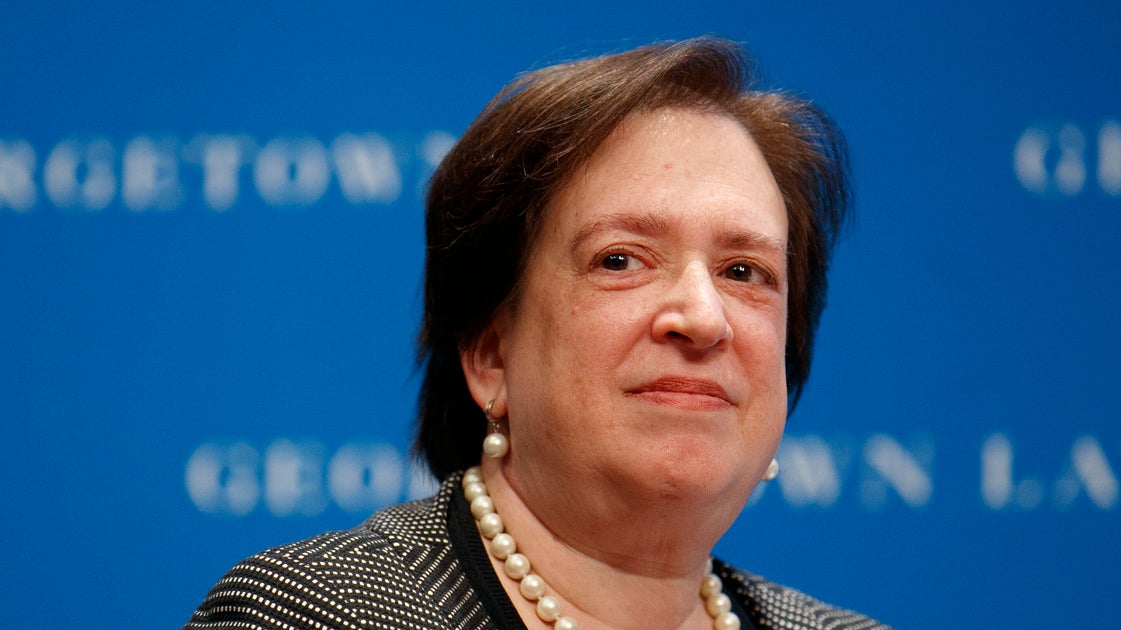
Justice Kagan Rips SCOTUS For Gutting Voting Rights Act In Dour Dissent
Images
1 / 7

2 / 7
3 / 7
4 / 7

5 / 7
6 / 7

7 / 7
The Supreme Court’s 6-3 decision Wednesday to permit states to redraw voting districts in such a manner as to decrease minority representation could well set the U.S. back to before the landmark Voting Rights Act of 1965.

So warned Justice Elena Kagan in a dour dissent in Louisiana v. Callais, offering a long and dispiriting look at all the ways states circumvented the 15th Amendment from its ratification in 1870 until at least 1965.

Justices Ketanji Brown Jackson and Sonia Sotomayor joined Kagan in the dissent.

The 15th Amendment guaranteed racial equality in voting, yet Kagan noted that in the century that followed, for practical purposes, it did almost nothing of the sort.

“Especially in the South, States soon put in place a host of facially race-neutral devices to systematically disenfranchise African American citizens,” she wrote. “Poll taxes, literacy tests, ‘good character’ exams, property qualifications, convoluted registration processes—all these and more, when combined with administrative discretion, effectively suppressed the Black vote.”

Minority voter registration plummeted as a result. In Louisiana, noted Kagan, registered Black voters plummeted from 130,000 in 1896 to just 1,304 in 1904.

The Voting Rights Act ― and subsequent congressional action that barred states from dodging it ― made critical strides toward righting those wrongs. And the court’s reversal, Kagan argued, represents a historically grave misstep.

“The Voting Rights Act is—or, now more accurately, was—‘one of the most consequential, efficacious, and amply justified exercises of federal legislative power in our Nation’s history,’” she wrote.

“It was born of the literal blood of Union soldiers and civil rights marchers. It ushered in awe-inspiring change, bringing this Nation closer to fulfilling the ideals of democracy and racial equality,” she added. “And it has been repeatedly, and overwhelmingly, reauthorized by the people’s representatives in Congress. Only they have the right to say it is no longer needed—not the Members of this Court. I dissent, then, from this latest chapter in the majority’s now-completed demolition of the Voting Rights Act.”

Kagan warned that Wednesday’s decision marks a return to the minority voter disenfranchisement of yore, when politicians could carve out a majority-white district so egregious that minority residents saw no point in even registering to vote.

“The consequences are likely to be far-reaching and grave,” she predicted, adding that as a result of the court’s decision, “minority voters can now be cracked out of the electoral process.”

“I dissent because Congress elected otherwise,” she concluded. “I dissent because the Court betrays its duty to faithfully implement the great statute Congress wrote. I dissent because the Court’s decision will set back the foundational right Congress granted of racial equality in electoral opportunity. I dissent.”

By entering your email and clicking Sign Up, you're agreeing to let us send you customized marketing messages about us and our advertising partners. You are also agreeing to our Terms of Service and Privacy Policy.