yahoo Press
A Ukrainian drone company says it's teaming up with a US firm because staying home means getting 'eliminated'
Images
1 / 6
2 / 6

3 / 6

4 / 6
5 / 6

6 / 6
A Ukrainian drone maker is teaming up with a US company to make its drones on US soil.

It fears being "eliminated" if it stays in Ukraine, either by Russian attacks or competition.

Ukraine's firms are increasingly building abroad.

A Ukrainian drone maker worried about getting "eliminated" at home is teaming up with a US manufacturer to make weapons on American soil.

Stanislav Hryshyn, co-founder of General Cherry, told Business Insider that "actually to stay in Ukraine, that means actually to stay local and to be eliminated in a couple of years or even months."

Rising Ukrainian defense companies like his are increasingly seeing opportunities beyond their own conflict. They believe staying in Ukraine — where they're in the crosshairs and fighting to survive in a heavily saturated market with limited growth potential — could ultimately kill them, physically and commercially.

Staying home risks being outcompeted or destroyed.

First, he said, "we're a target for the enemy." Russia routinely targets Ukraine's defense production with missile and drone attacks.

But beyond that, the Ukrainian market is "not the biggest one, and it's very local," limited by what Ukraine's limited defense budget can afford. And at General Cherry, "we don't want to stay the local players."

Another concern is that without an international market presence, foreign companies could copy Ukrainian innovations and scale production, taking market share that could have gone to Ukrainian firms.

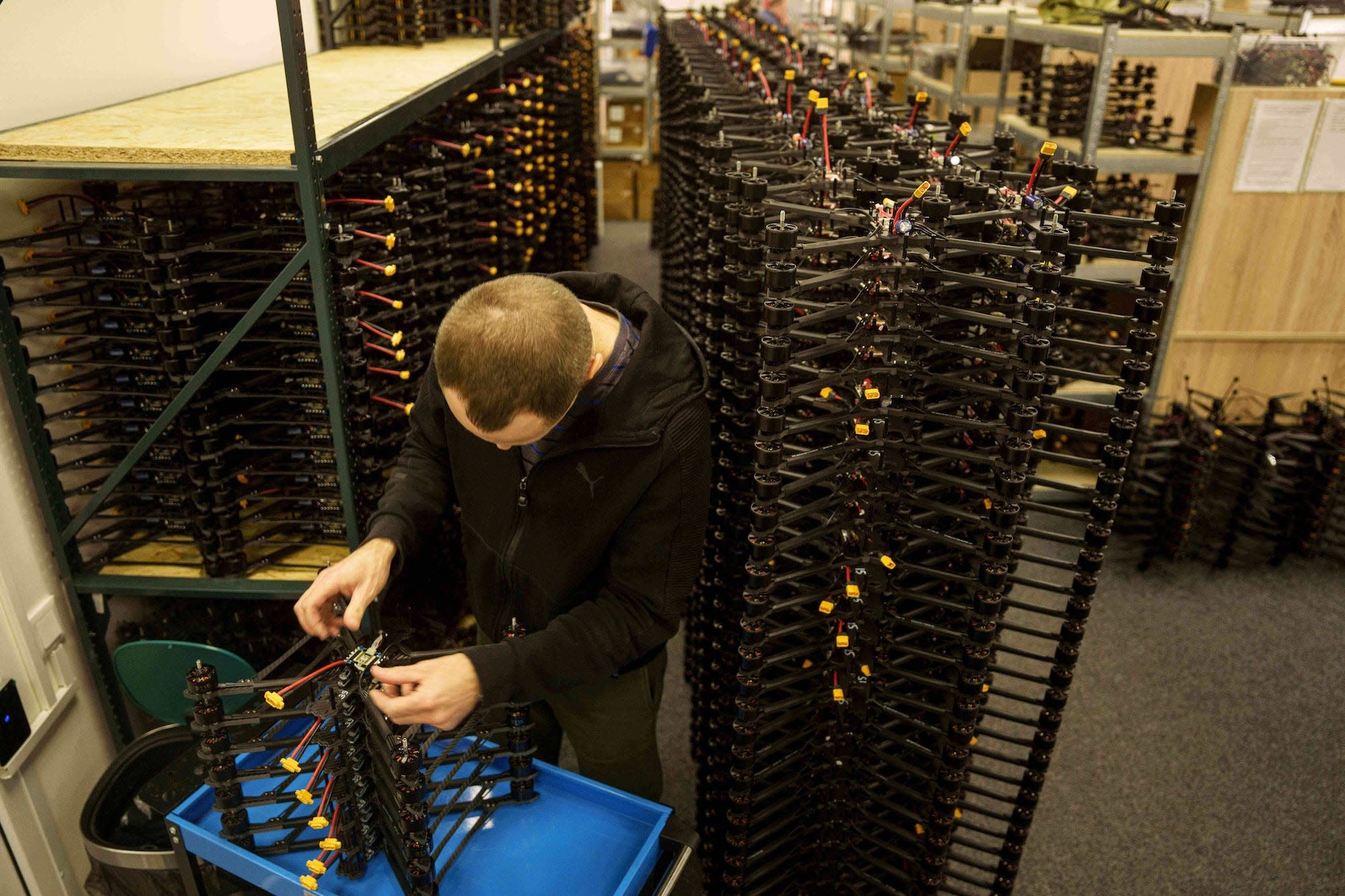
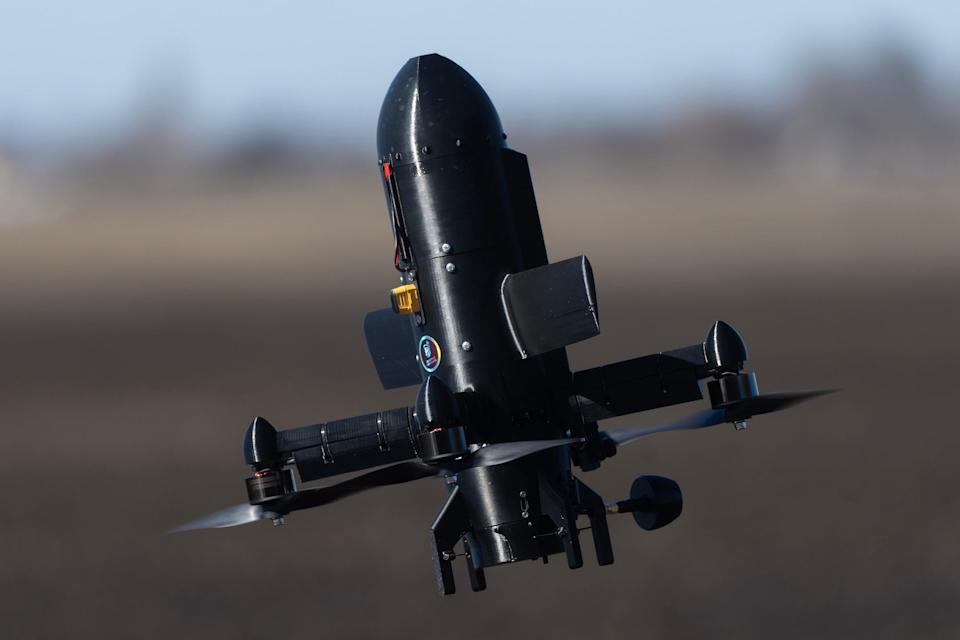
The company is now partnering with US manufacturer Wilcox Industries to make first-person-view (FPV) and interceptor drones in the US, with development led by General Cherry and production based at Wilcox's facility in New Hampshire.

The project is still awaiting formal approval, but the firm says Ukraine has endorsed the move, explaining it's "about scaling what works" and "bringing Ukrainian technology to the global level."

Hryshyn said that for security reasons, he could not comment on where the drones produced through the partnership would go, Ukraine or the US.

James Teetzel, the founder and CEO of Wilcox Industries Corp, said in a statement on the partnership that "there is no doubt in my mind that combining our Wilcox manufacturing infrastructure and engineering resources with General Cherry's technology, we will bring great value to our US Government." Teetzel's company makes defense equipment, including fire control systems and laser aiming devices.

General Cherry wants to be "integrated into the global defense system, to be a global player, to play on an international level," Hryshyn said. And for the company's growth, too, "we think it would be actually a crime if we stay in Ukraine. We're already big in Ukraine." But it's more than that.

Hryshyn says "the truth is actually that for US companies, they also have to learn a lot from us. And we hope that it'll be a fruitful partnership for both of us." Officials and industry leaders across the NATO alliance say there is significant value in Ukraine's battlefield-driven innovation and rapid production cycles.

Ukraine's defense industry is booming, making up a growing share of the equipment used by its military and drawing increasing interest from allies seeking battle-proven technology.

But staying in Ukraine comes with constraints. Companies are prioritizing supplying the war effort, but operating only domestically limits how much they can produce, hindering not just the companies but also wartime production capacity.

Industry leaders say that manufacturers have the capacity to make far more than they currently do, but they can't because Ukraine's defense budget can't afford to buy more gear. They argue exports would generate revenue to scale production, including for Ukraine's own forces.

Staying in Ukraine also means spreading out manufacturing and slowing production efforts to account for Russian attacks. Companies sometimes split their production across almost a dozen sites, which makes operations safer but also a lot less efficient.

Ukraine's leaders have been taking steps to expand which gear manufacturers can send abroad and which partnerships the industry can establish with other countries, including agreements that allow allies to obtain some Ukrainian weaponry.

Hryshyn said that his company chose Wilcox Industries because it is an established manufacturer with proven products. He said that while some startups were very interesting, they had not yet delivered tangible results.

Additionally, he said, "We think that the US market is actually the biggest one in the world."

General Cherry is one of a growing number of Ukrainian companies partnering with NATO companies to produce weapons abroad — reducing exposure to attacks while giving Western partners access to Ukrainian technology and experience. Denmark, a leader in the "Build with Ukraine" initiative, has said NATO companies have much to learn from Ukrainian firms and is seeking access to their tech.

Hryshyn said that he sees that demand firsthand. In discussions with Western partners, "our experience and expertise are pretty valuable for them." He added that the US is "learning some things from Ukraine," including how to work with startups and operate in a more open, flexible defense ecosystem.

Read the original article on Business Insider