yahoo Press
Dow falls as oil surges on Trump speech to 'hit Iran extremely hard'
Images
1 / 5
2 / 5

3 / 5

4 / 5
5 / 5
US automakers reported a mixed bag of vehicle deliveries in the first quarter, with Tesla and Ford seeing sales pressures while Rivian exceeded expectations, highlighting the challenges and opportunities in the electric vehicle market.

Tesla Inc (NASDAQ:TSLA) delivered 358,023 vehicles in the first quarter, missing Wall Street estimates of around 370,000, with production at 408,386 vehicles. Energy storage deployments reached 8.8 GWh. Deliveries were down about 14% from the previous quarter but slightly higher than Q1 2025.

Ford Motor Company (NYSE:F) saw U.S. sales drop 8.8% year-over-year in Q1, as higher borrowing costs, elevated prices, and reduced EV tax credits weighed on demand.

Rivian Automotive Inc (NASDAQ:RIVN) outperformed expectations, delivering 10,365 vehicles versus an estimated 9,678, with production at 10,236. The company reaffirmed its 2026 guidance of 62,000–67,000 vehicles, highlighting confidence in its manufacturing ramp.

Investors are re-evaluating positioning after Trump’s speech on Wednesday evening that analyst Nigel Green described as “combin(ing) signals of a near-term conclusion with continued threats of escalation and no clear resolution on key risks,” including control of the Strait of Hormuz.

“Markets were beginning to price in more certainty; but this speech reintroduces more ambiguity,” Green, CEO at deVere Group, said.

“What they’ve heard now is far less definitive, and that uncertainty is likely to drive volatility across asset classes.”

Investors had hoped that the conflict could end within weeks. However, Trump’s latest remarks stopped short of confirming a clear timeline, stating instead that the war is “nearing completion” while also emphasising the need to “finish the job.”

US stocks have started firmly in the red but as has often been the case of late, are quickly trimming losses.

The Dow Jones is down just over 1% and the S&P 500 off 0.9%, while the Nasdaq is worst affected, falling 1.4%.

Losses on the Nasdaq 100 were led by chipmakers and AI-linked names, with Micron down 6.7%, followed by Lam Research, ARM, Marvell and AMD.

Shopify was down 5.2%, AppLovin 4.7% and Palantir 3.8%, suggesting a wider rotation out of technology and momentum trades.

On the broader S&P, losses in travel stocks are most notable, with airlines and cruise companies leading declines, with United Airlines and Southwest Airlines both off more than 6%, while Carnival and Norwegian Cruise Line are down 5-6%.

Elsewhere, Robinhood slipped 6.4% and Coinbase 5.3%.

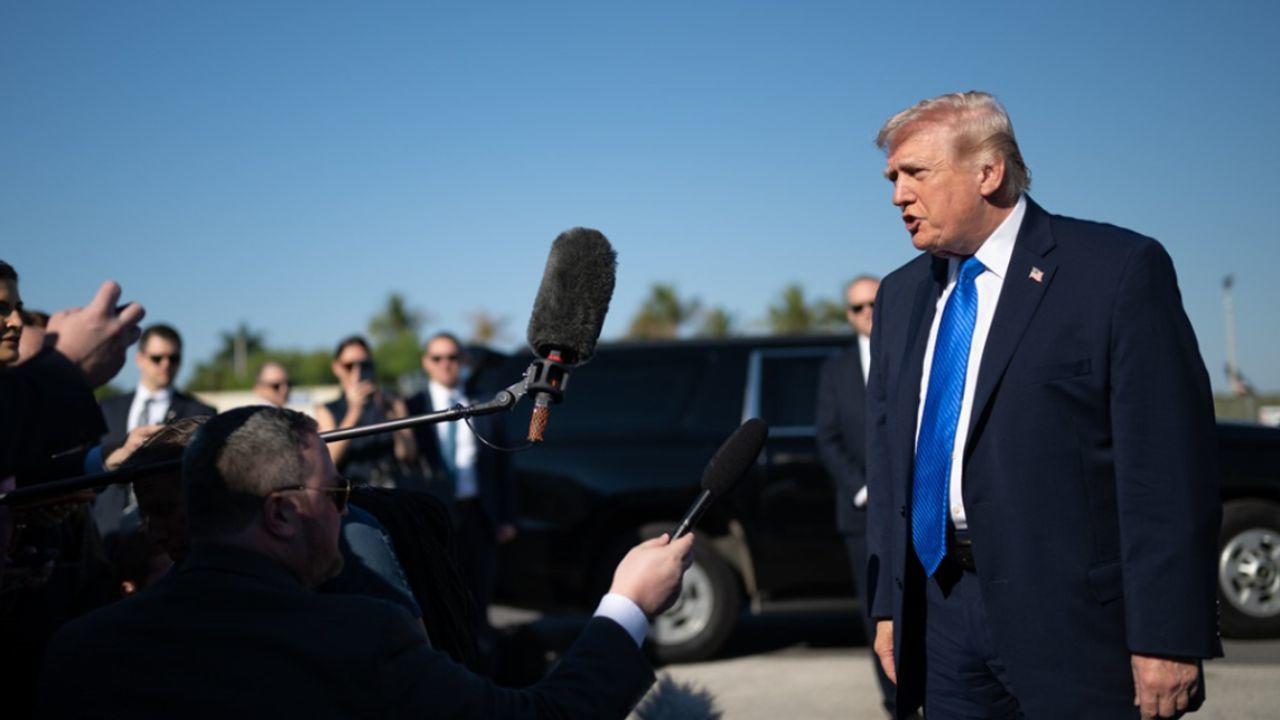
US stocks are set to fall on Thursday, giving back more than the previous day's gains after President Donald Trump warned the US would "hit Iran extremely hard" for up to three weeks.

The Nasdaq is expected to fall around 1.7%, with S&P 500 futures down 1.3% and the Dow Jones off 1.1%.

That comes after a more upbeat close on Wednesday, when hopes of a diplomatic off-ramp in Iran lifted sentiment. The Nasdaq led the way with a 1.2% gain, adding 250 points to finish at 21,841, while the S&P 500 rose 0.7% to 6,575 and the Dow Jones climbed 224 points or 0.5% to 46,566.

Markets turned after President Donald Trump gave a speech after markets closed on Wednesday evening, where he warned the US would step up strikes on Iran over the next two to three weeks, dampening expectations of a near-term resolution.

Oil prices have jumped in response, with WTI crude rising 8.6% to around almost $108 a barrel, as investors price in the risk of prolonged disruption through the Strait of Hormuz.

Precious metals have also retreated, with gold, silver and copper all lower, highlighting a broader repositioning across commodity markets as investors brace for volatility.

The shift saw Treasury yields rise and equities fall in pre-market trading, particularly in technology, where Nvidia and Alphabet shares were down around 2%, while Intel and Micron have fallen 3-4%.

Macro data due on Thursday includes US weekly initial jobless claims, trade balance and weekly natural gas storage.

It is the last trading day of the week, with US stock markets closed on Good Friday, though the March nonfarm payrolls report will still be released.