yahoo Press
Middle East auto sales outlook cut for 2026 as geopolitical tensions escalate
Images
1 / 4
2 / 4

3 / 4

4 / 4
Rising geopolitical tensions in parts of the Middle East are beginning to weigh on regional automotive demand expectations. The latest GlobalData industry outlook includes a meaningful downward revision to 2026 vehicle sales volumes amid escalating tensions involving Israel, the US and Iran, which have raised uncertainty across the region and increased the risk of further disruption.

Geopolitical risk has intensified following military strikes and retaliatory actions involving key parties. The situation remains fluid, and continued volatility is likely to strain consumer confidence, business sentiment, and cross-border trade activity in the near term. For the automotive sector, this typically translates into delayed purchases, tighter credit appetite and greater caution among fleet operators and distributors. OEMs and dealers may also face higher logistics and insurance costs, as well as greater difficulty forecasting demand and managing inventory.

The updated forecast suggests that the region’s Light Vehicle (LV) market could fall to around 2.7 million units in 2026, down from 3.05 million units in 2025. The downgrade reflects softer consumer sentiment, heightened regional risk perceptions, and a more cautious investment backdrop.

In terms of segments, the region’s Passenger Vehicle (PV) market could decline to 2.35 million units in 2026, down from roughly 2.68 million units in 2025, representing a year-on-year (YoY) decrease of 12%.

Light Commercial Vehicle (LCV) demand is also expected to soften. Volumes are projected to decline from around 370k units in 2025 to 337k units in 2026, reflecting a reduction of 9% YoY. In addition to weaker sentiment, CV volumes are typically sensitive to construction activity, trade flows and public-sector project pacing—areas that can slow as uncertainty rises.

Most of the forecast adjustment is concentrated in the region’s largest automotive markets of Saudi Arabia, the UAE and Iran, where purchasing activity tends to react quickly to shifts in risk and economic expectations. Among these, Iran is expected to be the most affected, with LV sales projected to decline by 23% YoY in 2026.

Given Iran’s position as one of the Middle East’s largest automotive markets, it accounts for more than half of the region’s overall sales downgrade in 2026, underscoring its outsized influence on the regional outlook. The current escalation involving Iran, alongside broader geopolitical pressures and existing economic challenges, is expected to weigh on near-term purchasing activity and vehicle demand through reduced discretionary spending and a more constrained operating environment for the retail channel.

Saudi Arabia is expected to remain the region’s largest PV market in 2026, although volumes are forecast to ease from around 772k units in 2025 to 714k units in 2026, before returning to growth in subsequent years. The near-term decline is expected to reflect a more cautious consumer environment and potential delays in purchasing decisions, rather than a deterioration in the structural demand story.

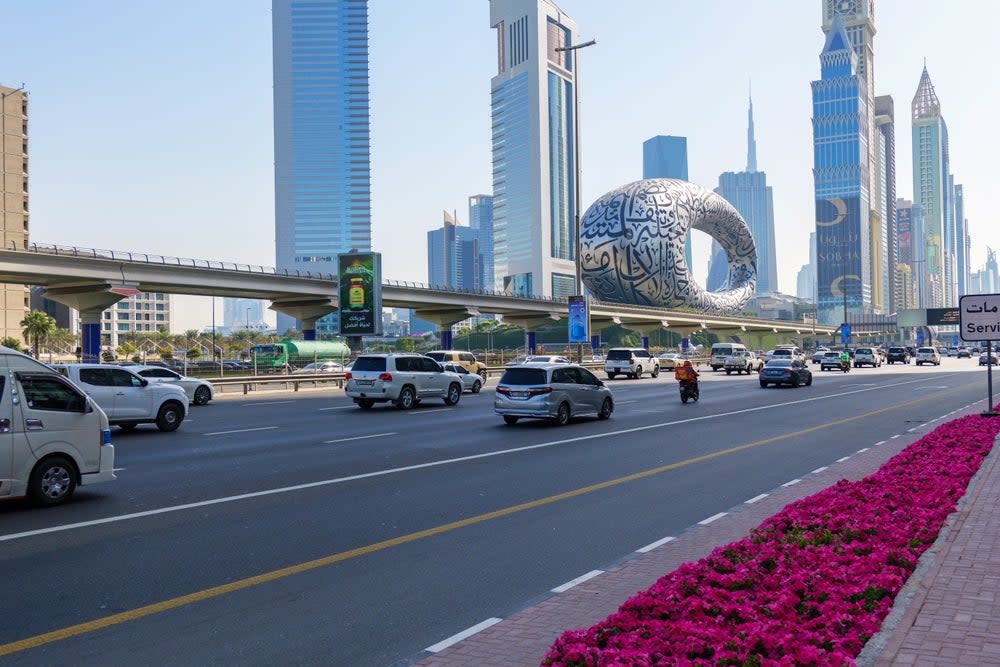
The UAE market is also projected to register a modest decline in 2026, consistent with weakened confidence and a more conservative stance among private buyers and fleets. However, the underlying market fundamentals remain comparatively resilient, supported by a diversified economy and continued demand across key customer segments.

Despite the near-term correction, the medium-term outlook for the Middle East’s automotive sector remains constructive. Current projections indicate that the decline expected in 2026 will likely be followed by a broad-based recovery across key markets from 2027 onward. Volumes are anticipated to rebound across major markets including Iran, Saudi Arabia, the UAE, Qatar, Israel, and other GCC markets, reflecting a normalization of demand once geopolitical pressures begin to ease. Strong population growth, relatively low vehicle ownership levels in several markets, and ongoing economic diversification initiatives continue to support long-term demand for PVs and CVs. Over time, investment linked to infrastructure development and broader non-oil sector expansion should help to re-accelerate replacement demand and fleet renewal cycles.

For now, the revised forecast suggests a temporary pause in momentum across the region in 2026. Iran is likely to be the primary driver of the downgrade, while Saudi Arabia and the UAE are anticipated to see more modest pullbacks as geopolitical uncertainty feeds through to consumer and business confidence. This revision represents GlobalData’s rapid response to the recent escalation of military activity in the Middle East and reflects the near-term risk environment facing the region’s automotive markets. The situation remains fluid and GlobalData will continue to monitor developments closely, adjusting the outlook as conditions evolve.

Vivek Sharma, Director, Automotive, GlobalData

"Middle East auto sales outlook cut for 2026 as geopolitical tensions escalate" was originally created and published by Just Auto, a GlobalData owned brand.


The information on this site has been included in good faith for general informational purposes only. It is not intended to amount to advice on which you should rely, and we give no representation, warranty or guarantee, whether express or implied as to its accuracy or completeness. You must obtain professional or specialist advice before taking, or refraining from, any action on the basis of the content on our site.