huffpost Press
The Trump Admin’s Most Consistent Reason For Attacking Iran Is A Problematic One
Images
1 / 6

2 / 6
3 / 6
4 / 6

5 / 6

6 / 6
In the lead-up to and in the immediate aftermath of launching a war on Iran, President Donald Trump’s administration provided a dizzying array of shifting rationales for starting a conflict with dire global implications. But after a few days of public pressure, briefings with members of Congress and countless phone calls between Trump and reporters, a more consistent answer emerged: It was because of Israel.

“We knew that there was going to be an Israeli action. We knew that that would precipitate an attack against American forces, and we knew that if we didn’t pre-emptively go after them before they launched those attacks, we would suffer higher casualties,” Secretary of State Marco Rubio told reporters on Monday after briefing lawmakers at the Capitol.

Rubio’s argument is that Israel told the U.S. it was planning to bomb Iran. If they did so, Iran would respond by targeting U.S. troops. Rather than attempt to talk Israel out of launching an attack, Rubio suggested the United States had no chance but to join a war Israel was going to launch.

This rationale has now trickled down to the rest of the war’s supporters in the Republican Party.

“Israel faced an existential risk and they were prepared to strike Iran alone,” Sen. Tom Cotton (R-Ark.) told Fox News on Monday. “If that happened, Iran was very likely to target our troops. That may address the question of why now.”

Israel was “determined to act in their own defense here, with or without American support,” Speaker Mike Johnson (R-La.) told reporters on Monday.

Democrats, in criticizing the decision to start a new war in the Middle East, have also said that the administration’s argument is that the war was precipitated by Israel’s proposed actions to deal with what it viewed as a threat.

“There was no imminent threat to the United States of America by the Iranians. It was a threat to Israel,” Sen. Mark Warner (D-Va.), the top Democrat on the Senate Intelligence Committee, told reporters on Monday. “We equate a threat to Israel as the equivalent of an imminent threat to the United States, then we are in uncharted territory.”

“This is still a war of choice that has been acknowledged by others that was dictated by Israel’s goals and timeline,” Warner added.

Never one to have his ego bruised, Trump contradicted his own administration’s line on Tuesday to claim Israel did not push him to war.

“If anything, I might’ve forced Israel’s hand,” Trump said.

Soon after, Rubio tried to clean up his remarks by telling reporters that “the president made a decision,” not Israel. When CNN’s Manu Raju read back Rubio’s previous quote, Rubio dodged and moved to answer a question from another reporter.

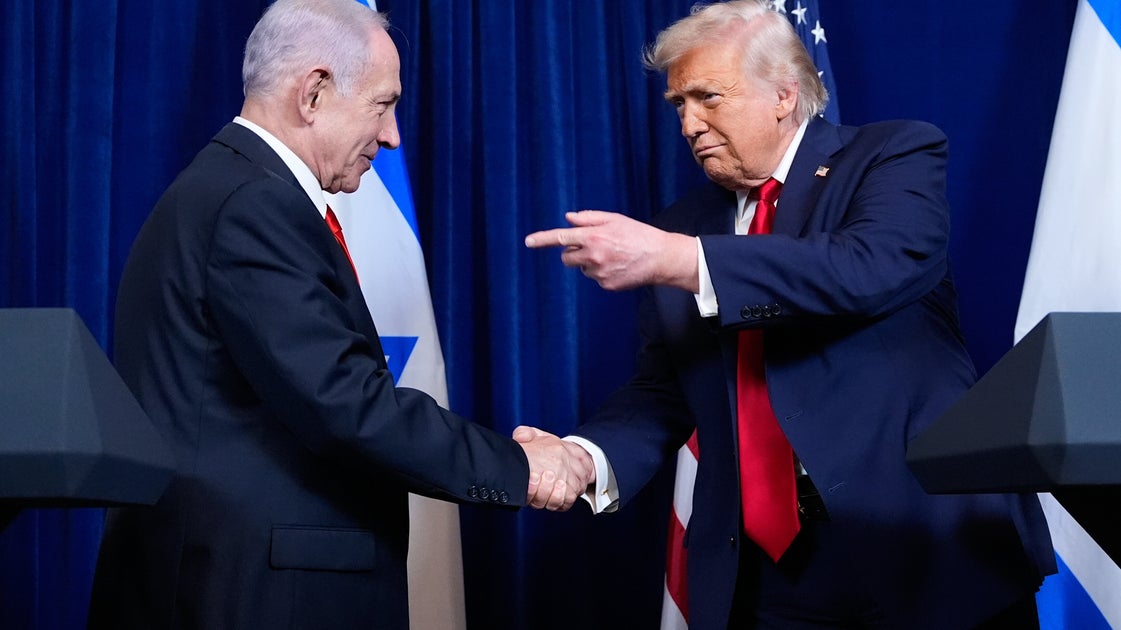
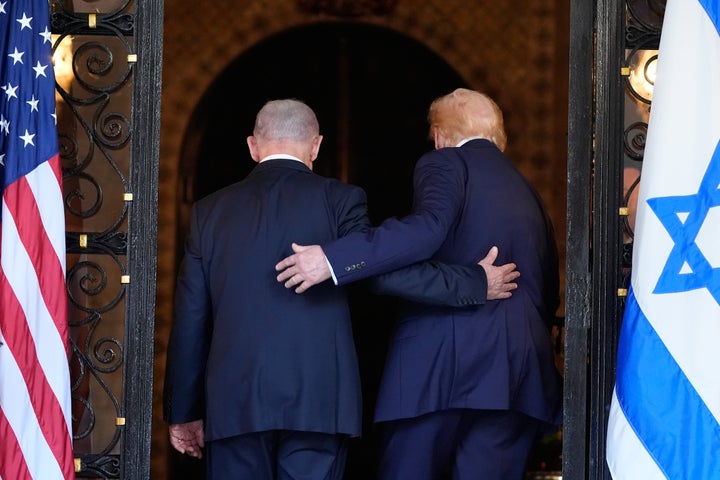
But Israel appears to have put forward this threat to launch a preemptive strike as the Trump administration was engaged in diplomatic negotiations with Iranian leadership. Israeli Prime Minister Benjamin Netanyahu made a surprise visit to the White House to meet with Trump on Feb. 11 in order to “keep the American president on the path to war,” the New York Times reported.

Netanyahu, the fiercest opponent of the nuclear deal that President Barack Obama reached with Iran in 2015 and that Trump tore up in 2017, was opposed to any outcome that could come from diplomatic negotiations. Indeed, the Israeli government had already decided to assassinate Ayatollah Ali Khamenei after the deadly Hamas attacks on Oct. 7, 2023, according to USA Today.

After Israel and the U.S. successfully assassinated Khamenei, Netanyahu bragged that, thanks to Trump, he was finally able “to do what I have yearned to do for 40 years: smite the terror regime hip and thigh.”

In the past, American presidents from Dwight Eisenhower to George H.W. Bush knew that the U.S. and Israel had different strategic objectives and desired strategic outcomes. And they acted on it, refusing to bend to Israel’s wishes. Trump, however, has hitched his wagon to Israel’s strategy of remaking the region through sheer force. (His predecessor, Joe Biden, seemed to have made a similar calculation.)

This strategy is not new, although it has come into full bloom as Israel sought to eliminate all potential threats following the Oct. 7 attacks. In 1996, American political figures Richard Perle and Douglas Feith, who went on to lead the U.S. into the Iraq War, led a study group on behalf of Netanyahu to devise a new strategy for Israeli power in the Middle East. The Clean Break memo that emerged from this counseled Israel to assert itself as a regional power by breaking free from the Israeli-Palestinian peace process and launching a campaign to eliminate hostile regimes or actors in Palestine, Iran, Iraq, Syria and Lebanon.

Much of that plan has come to fruition. Netanyahu fiercely advocated for the Iraq War that deposed its dictator, Saddam Hussein. Syrian ruler Bashar al-Assad is gone. Israel assassinated Hezbollah’s leader Hassan Nasrallah and crushed its capabilities in Lebanon. Meanwhile, Gaza is in ruins and Israel is threatening to annex the West Bank. What is left is Iran, which Netanyahu called “the most dangerous of these regimes” in a 1996 speech to Congress that echoed themes in the Clean Break memo.

Netanyahu was initially rebuffed on his Clean Break plan by President Bill Clinton, who pressured him to reenter negotiations with the Palestinians. But he has since found two sequential U.S. presidents who refused to tell him no in Biden, who provided crucial support for Israel’s brutal destruction of Gaza, and now Trump.

The war will be “a gateway to peace,” Netanyahu said on Fox News on Monday night. But that is exactly what he said about regime change in Iraq, famously telling Congress the invasion “will have enormous positive reverberations on the region.” How did that go?

By entering your email and clicking Sign Up, you're agreeing to let us send you customized marketing messages about us and our advertising partners. You are also agreeing to our Terms of Service and Privacy Policy.