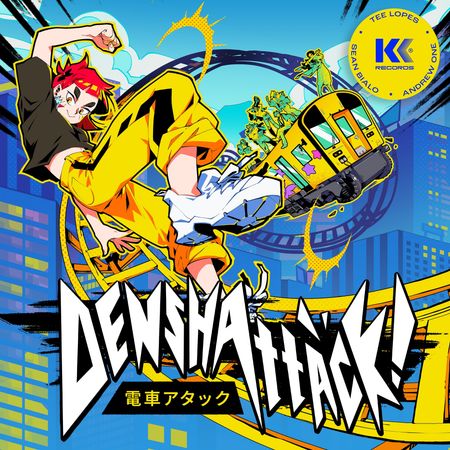
Various Artists: Denshattack! (Original Game Soundtrack)
0.0 0.0 Reader Score No score yet, be the first to add. 0.0 Label: Kid Katana Release Date: 2026 It’s easy to forget—especially today—that being retro can actually mean being moder…

0.0
0.0
Reader Score
No score yet, be the first to add.
0.0
Label:
Kid Katana
Release Date:
2026
It’s easy to forget—especially today—that being retro can actually mean being modern. Retro styles let artists treat history like a patchwork: transmuting an homage into something new, using the past to tell stories of the present, creating today out of yesterday. Denshattack!, the new rhythmic trick-based platformer from indie developer Undercoders, reads from Y2K Sega like it’s the Bible. The game has the beaming cell-shaded graphics of Jet Set Radio, the high-octane attitude of 3D-era Sonic the Hedgehog, and the hedonistic gameplay of Crazy Taxi. But Denshattack! parlays its old scripture into a product of the now—not even cracked-out late-’90s Sega could make a game where you perform skateboarding tricks as subway trains in the name of fighting climate change and AI. New matters, old styles; 1999, meet 2026.
But even with all of this retro glory, Denshattack! would be an abject failure if it didn’t get its music right. Gaming soundtracks at the turn of the millennium spanned futurist dance, funk, hip-hop, and hard-rocking pop; these sounds are arguably the games’ most widely-known feature, their influence scattered across new albums and Instagram Reels alike. Denshattack!’s cocktail of these sounds is the best and most ambitious aspect of its perfect sense of retro. Featuring an all-star team of composers from video games’ past, present, and future, Denshattack!’s 80-track score adds a shining original product to the ongoing continuum of Y2K gaming.
No score yet, be the first to add.
0.0
Rising video game composers deploy new forms of old styles up and down the tracklist. Andrew One’s back-to-back tracks “Glow Up!” and “I Like the Way” feel like funky Dreamcast scores in an updated make and model, the latter featuring the classy attitude of the Metropolis Street Racer soundtrack with 2020s K-pop vocals replacing its ’90s R&B. Sean Bialo’s “Beppu Ramen Express” and “Tunnel Scratcher” weave familiar fragments from the classic soundtracks of Sega’s past—roaring synthetic guitars from the Saturn era, Jet Set Radio’s hefty record scratches and sample CD-plucked vocals, and Sonic Unleashed’s organic strings and woodwinds—into a sea of new-fashioned techno.
Alongside the young composers, the soundtrack features icons of ’90s video game scores en masse. And yet, rather than take the easy path—lazily rehashing sounds of old—these artists pave new roads. Namco legend Kohta Takahashi’s track “Success Starland” infuses his heavy metal Tekken work with the sparkling fantasy of his Klonoa music; Harumi Fujita revitalizes her extravagant 16-bit work on Final Fight and Skyblazer with souped-up instrumentation on “Nebuta Ransen!” And as soon as I heard Takenobu Mitsuyoshi’s “Infinite Sky,” a weapons-grade continuation of his classic Sega Am2 work that features his absurdly over-the-top vocals, I absolutely did the point with the face. How could anyone who loves video games not?
If you imagine these veterans as this dream team’s Magic Johnsons and Larry Birds—legends still putting up numbers late in their careers—Tee Lopes is its Michael Jordan: a relative newcomer outdoing his predecessors in his prime. He already made the platonic ideal Sonic soundtrack with 2017’s Sonic Mania, and earns himself another trophy here. “Healthy Vandalism” makes a jungle track by combining Mania’s soaring synth solos with brisk acoustic guitar sample chops right out of the Field’s playbook. He makes dreamworks out of garage, too; every measure of “Mikan Kingdom” deviates from the prior, shuffling between mangled piano riffs, tape-stops, and a catchy-as-hell “here we go now!” “Wanman ☆ Clash” blends legacy and inventiveness by taking a percussion foundation reminiscent of Ridge Racer and adding Naganuma-esque hyperdriven plunderphonics and happy-go-lucky instrumentation.
Sometimes, these attempts at artful homages turn to outright mimicry—“Keep the Balance” could substitute for any late-’00s Sonic boss-fight theme and you wouldn’t notice—but perhaps that’s unavoidable over 80 tracks that attempt to capture the spirit of something as broad as “the sounds of turn-of-the-millennium gaming” from a contemporary lens. It’s an ambitious task that few other video game soundtracks, let alone indie ones, have attempted—and none have reached this degree of success. Where most retro games land like shallow revivalism, Denshattack! extends the highs of video game soundtracking’s glory days while offering a vital sense of freshness.
0.0
0.0
Images from the story


End of article